Cayenne Pepper for Weight Loss: How Capsaicin Drives Thermogenesis and Fat Loss
Quick Answer: Does Cayenne Pepper Help You Lose Weight?
Cayenne pepper for weight loss works by accelerating a deficit, not by creating one. Its active compound, capsaicin, can raise your metabolic rate by roughly four to five percent for a few hours and gently increase fat burning, while blunting the hunger hormone ghrelin so you eat a little less. The effect is real and useful as support, but modest — it speeds up your effort rather than replacing it. The pooled human data sit behind that judgement: Zsiborás et al. Capsaicin and capsiate could be appropriate agents for treatment of obesity: a meta-analysis of human studies. Critical Reviews in Food Science and Nutrition, 2018.
- Thermogenesis: a small metabolic-rate rise, roughly 4–5% for a few hours.
- Appetite: blunts ghrelin and may nudge GLP-1 for less hunger.
- Key caveat: accelerates a calorie deficit; it does not spot-reduce belly fat.
The burn you feel from a hot chilli is not just a sensation; it is your body responding to a compound that has genuinely measurable metabolic effects. That is why cayenne has become a fixture in thermogenic supplements. As always, the interesting part is the gap between the marketing and the measurements. This page walks through what capsaicin does to your metabolism and appetite, how large the effect really is, and how to use it sensibly.
Cayenne pepper for weight loss: the thermogenic mechanism
Cayenne's power comes from a family of compounds called capsaicinoids, of which capsaicin is the best studied. When capsaicin contacts your tissues, it activates a receptor called TRPV1 — the same receptor that registers heat. Your nervous system responds as though you are warming up, switching on a mild thermogenic reaction: you produce a little more heat, burn a few more calories, and shift slightly toward using fat as fuel. This is thermogenesis, and it is the honest heart of every cayenne fat-loss claim.
The size of that response is where honesty earns its keep. Controlled studies typically find capsaicin raises metabolic rate by around four to five percent, and only for a few hours after a dose. On top of that comes a small increase in fat oxidation. These are real, repeatable effects, but put them in perspective: four to five percent of a resting metabolism is a modest number of extra calories, not a furnace. Cayenne tilts the energy balance in your favour; it does not rewrite it.
The appetite side: ghrelin, GLP-1 and eating less
Thermogenesis is only half the story, and arguably the appetite effect is the more practically useful half. Capsaicin has been shown to blunt ghrelin, the hormone that signals hunger, and there is evidence it may nudge satiety signals such as GLP-1 in the right direction. The everyday consequence is that a spicy meal, or a capsaicin dose taken with food, tends to leave people feeling satisfied on slightly less, and reaching for fewer calories at the following meal. A crossover meal study measured exactly this pattern — Smeets and Westerterp-Plantenga. The acute effects of a lunch containing capsaicin on energy and substrate utilisation, hormones and satiety. European Journal of Nutrition, 2009.
This dual action — burn a fraction more, eat a fraction less — is why capsaicin keeps its place in the research despite its modest magnitude. Two small levers pulling in the same direction add up more reliably than one. If your main battle is hunger rather than metabolism, it is worth reading cayenne alongside our guide to a natural appetite suppressant that actually works, which sets capsaicin next to the fibre and protein strategies that tackle appetite from other angles.
What a meta-analysis of the trials found
| Measure | What the pooled evidence shows for capsaicin |
|---|---|
| Metabolic rate | Small rise, roughly 4–5%, lasting a few hours per dose |
| Fat oxidation | Modest increase in the proportion of fat used for fuel |
| Appetite / intake | Blunted ghrelin; a small reduction in energy intake |
| Body weight, BMI, waist | Small but statistically significant reductions across 15 RCTs |
| Spot reduction | None — capsaicin does not target belly fat specifically |
A meta-analysis pooling fifteen randomised controlled trials landed on exactly the picture you would expect from the mechanism: small but genuine reductions in weight, BMI and waist circumference. The word doing the work in that sentence is "small". These are the numbers of a helpful supporting ingredient, and reading them clearly is the best inoculation against the fat-burner marketing that inflates them tenfold. For the size of the effect in humans rather than the advertising version, see Ludy et al. The effects of capsaicin and capsiate on energy balance: critical review and meta-analyses of studies in humans. Chemical Senses, 2012.
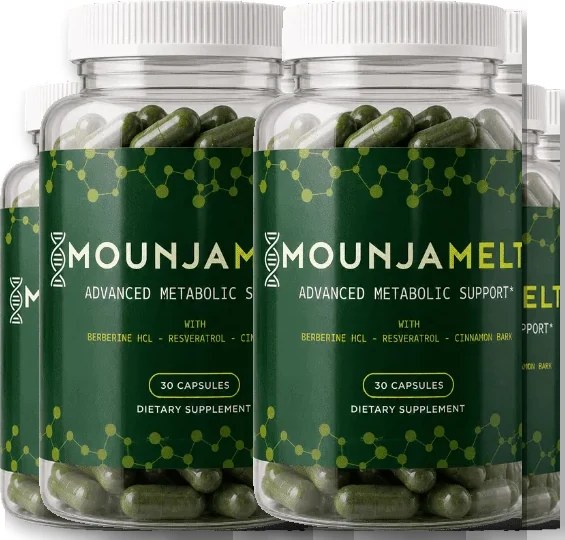
See what is actually on the MounjaMelt label
Every named ingredient, the honest evidence behind each one, and the current pricing on the official store.
See MounjaMelt PricingObjections and myths, answered honestly
"Cayenne burns belly fat specifically." No ingredient does. Capsaicin increases whole-body fat oxidation and total calorie burn; it has no mechanism to target the fat over your abdomen versus anywhere else. Belly fat tends to be the last to go for reasons of physiology and genetics, and a thermogenic ingredient does not change that order. What it can do is make the overall deficit that reduces all your fat stores slightly easier to achieve.
"If it raises metabolism, more is better." The limiting factor with cayenne is not benefit but tolerance — of your stomach, not your fat cells. Push the dose and you gain digestive discomfort rather than proportionally more fat loss, because the metabolic effect plateaus while the burn does not. A standardised, food-friendly dose captures the benefit without turning every day into a test of your gut.
"It works on its own, so I can skip the diet." This is the myth that empties wallets. A four-to-five percent bump in metabolism for a few hours is meaningful only on top of a calorie deficit. With no deficit, there is nothing for the thermogenesis to accelerate. Cayenne is a multiplier, and multiplying zero effort still gives you zero.
When is the best time to take cayenne?
Because the thermogenic effect lasts only a few hours, timing gives you a minor edge. Taking capsaicin with a meal is the most comfortable approach, since food buffers the heat and lines the appetite-blunting effect up with when you are actually eating. Some people prefer to take it shortly before exercise, so the small metabolic bump overlaps with the calorie burn of movement. Either is fine. What matters far more than the clock is consistency — a dose taken daily for eight to twelve weeks is a real test; a dose taken twice and forgotten is not.
Cayenne also plays well with other thermogenic and metabolic ingredients, which is why it rarely appears alone. It sits naturally next to green tea catechins for fat burning and metabolism, which pushes the same energy-expenditure lever through the caffeine-catechin route rather than the TRPV1 route. Stacking complementary mechanisms is how these modest single-ingredient effects are designed to add up into something you can actually notice.
Where the evidence stops
Two honest limits are worth stating plainly. First, capsaicin does not override the fundamentals. Sleep, protein, total activity and the overall quality of your diet influence body composition far more than any thermogenic spice, and no dose of cayenne compensates for neglecting them. Second, the effect is genuinely modest and time-limited, so anyone promising rapid, dramatic fat loss from cayenne alone is selling the mechanism far beyond what the trials support.
There is also a tolerance and comfort ceiling. For some people, capsaicin causes stomach upset or heartburn, especially at higher doses or on an empty stomach, and that discomfort is the practical limit long before any theoretical metabolic maximum. We cover who should be cautious in our broader overview of weight-loss supplement side effects and safety. As with every ingredient in this category, cayenne is a tailwind on a well-run plan, not a replacement for one.
Cayenne in food versus a standardized capsule
You do not strictly need a supplement to get capsaicin, because chilli is a food. So it is worth being clear about what a capsule actually adds. Eating spicy food regularly does deliver capsaicin and its small metabolic and appetite effects, and if you genuinely enjoy heat, that is a pleasant and essentially free way to capture some of the benefit. The catch is dose and tolerance. To reach the capsaicin amounts used in the studies through food alone, many people would have to eat a level of heat that is uncomfortable or impractical at every meal, and tolerance to the burn builds quickly, pushing the required amount ever higher.
A standardised capsule sidesteps that. It delivers a consistent, measured dose of capsaicinoids without requiring your palate to escalate, and many formulations use a coating or beadlet designed to release the compound lower in the digestive tract, which reduces the mouth-and-stomach burn that puts people off. That is the practical case for the capsule: it makes a studied dose repeatable and comfortable in a way that chilli-laden meals rarely are.
None of this means the capsule is powerful and the food is not. The mechanism is identical; only the delivery differs. If you love spicy food, keep eating it and treat any metabolic bump as a bonus on top of an enjoyable habit. If you want the studied dose reliably, day after day, without turning every meal into an endurance event, a standardised capsaicin dose in a capsule is the sensible route. Either way the magnitude is the same modest, honest effect, and neither version substitutes for the diet and activity underneath it.
Is cayenne in MounjaMelt? No — and that is worth knowing
Cayenne is not one of MounjaMelt’s ingredients, and we would rather say so plainly than let a thermogenesis article imply otherwise. The seven ingredients named on the MounjaMelt label are berberine HCl, cinnamon bark extract, resveratrol, gymnema sylvestre, chromium, L-carnitine and green tea extract. If you specifically want capsaicin, you need a separate cayenne or capsicum extract product — or simply more chilli in your cooking, which is how every trial in this article delivered it.
What MounjaMelt does use is a different set of levers aimed at the same target: green tea extract covers the thermogenic and fat-oxidation angle that cayenne occupies in other formulas, while berberine, cinnamon bark and gymnema work on the glucose-and-cravings side. You can see the full list in our MounjaMelt formula and pricing breakdown. One caveat applies to both routes: exact per-capsule milligram amounts were not published on the pages we reviewed, so no named ingredient can be matched against a trial dose. The framing never changes — name the mechanism, state the honest magnitude, and be clear that diet and activity are the engine.
Medical note: this article is general information, not medical advice. Dietary supplements are not intended to diagnose, treat, cure or prevent any disease. Speak to a healthcare professional before starting any supplement, especially if you are pregnant, nursing, prone to heartburn or reflux, have a digestive condition, or take medication — capsaicin can irritate the stomach and interact with some drugs.
Frequently asked questions
Does cayenne pepper actually burn fat?
It nudges the process rather than doing the work. Capsaicin, the active compound in cayenne, can raise metabolic rate by roughly four to five percent for a few hours and modestly increase fat oxidation. That accelerates a calorie deficit you are already creating with diet and activity; it does not melt fat on its own.
How does capsaicin boost metabolism?
Capsaicin activates TRPV1 receptors, which triggers a mild thermogenic response and a small rise in energy expenditure and heat production. It also encourages the body to use fat as fuel to a modest degree. The overall effect is real but small, typically a few percent above baseline for a limited window after each dose.
Can cayenne suppress appetite?
For many people, yes, to a modest extent. Capsaicin has been shown to blunt ghrelin, the hunger hormone, and may nudge satiety signals such as GLP-1, which can lower how much you eat at the next meal. The result is usually a smaller reduction in intake rather than a dramatic loss of appetite.
When is the best time to take a cayenne supplement?
Most people take it with a meal, which softens any burning sensation and lines the appetite effect up with eating. Taking it before activity can pair the small metabolic bump with movement. Consistency matters more than exact timing, and taking it with food is the most comfortable approach.
Scientific references
- NIH Office of Dietary Supplements — Dietary Supplements for Weight Loss
- NCBI Bookshelf (StatPearls) — Capsaicin: pharmacology and the TRPV1 mechanism
- Ludy MJ et al. The effects of capsaicin and capsiate on energy balance: critical review and meta-analyses of studies in humans. Chem Senses, 2012
- Zsiborás C et al. Capsaicin and capsiate could be appropriate agents for treatment of obesity: a meta-analysis of human studies. Crit Rev Food Sci Nutr, 2018
- Smeets AJ, Westerterp-Plantenga MS. The acute effects of a lunch containing capsaicin on energy and substrate utilisation, hormones and satiety. Eur J Nutr, 2009
- FTC — Health Products Compliance Guidance (weight-loss claims)
See how MounjaMelt puts this together
A standardized cayenne dose, the thermogenic stack, and the honest evidence — with today's pricing on the official store.
Check Availability