Green Tea for Weight Loss: How Catechins Support Fat Burning and Metabolism
Quick Answer: Does Green Tea Help With Weight Loss?
Green tea for weight loss works as a gentle assist, not an engine. The catechins in green tea, chiefly EGCG, can modestly raise your resting metabolism and fat oxidation, and the effect is clearest when it is paired with caffeine and regular activity. Expect a small tailwind on a calorie deficit, not a shortcut that works while you sit still. That framing matches the NIH NCCIH review of green tea, which is candid about how small the effect is.
- What it does: a small, real rise in energy expenditure and fat burning.
- What amplifies it: the caffeine already in green tea, plus movement.
- Key caveat: modest by design — it supports a diet, it does not replace one.
Few ingredients have been sold harder than green tea. It shows up on fat-burner labels, in slimming teas, and in nearly every "boost your metabolism naturally" listicle on the internet. Behind the marketing there is a genuine kernel of science, but there is also a great deal of exaggeration. This page separates the two, so you know exactly what a standardised catechin dose can and cannot do before you spend a penny on it.
Green tea for weight loss: what the catechin evidence shows
The active compounds are a family of plant antioxidants called catechins, and the star of the group is epigallocatechin gallate, mercifully shortened to EGCG. When researchers give people green tea catechins and measure their metabolism in a chamber, they tend to see two things: a small rise in the number of calories burned at rest, and a slightly higher proportion of those calories coming from fat rather than carbohydrate. Both effects are consistent enough to be believable and small enough to keep your expectations honest.
Meta-analyses that pool dozens of these trials land in the same place. Green tea catechins are associated with a modest reduction in body weight and a small shift in body composition over a period of weeks to months. The averages are measured in a small number of kilograms at most, and they shrink further once you account for diet and exercise happening in the background. This is the recurring theme of natural weight support: the direction of the effect is real, the size of it is unglamorous. The pooled figure comes from Hursel et al. The effects of catechin rich teas and caffeine on energy expenditure and fat oxidation: a meta-analysis. Obesity Reviews, 2011.
The caffeine-catechin synergy behind the fat-burning effect
Green tea does not work in a vacuum, and the most important partner is caffeine, which occurs naturally in the leaf. Caffeine on its own has a mild thermogenic and fat-mobilising effect, and catechins appear to extend and reinforce it. The proposed mechanism is elegant: your body uses an enzyme called COMT to break down noradrenaline, the messenger that tells fat cells to release their stored energy. EGCG slows that enzyme down, so the "release fat" signal lingers a little longer, while caffeine keeps the signal switched on.
This is why the combination consistently outperforms either compound alone in the research, and why the effect is easiest to detect in people who are physically active. Movement raises noradrenaline in the first place; the catechins simply help that signal do more before it is cleared. It is also why a decaffeinated, catechin-only product tends to look weaker on paper. The two work as a pair.
How big is the effect, honestly?
| Claim you will see online | What the evidence actually supports |
|---|---|
| "Melts fat while you sleep" | A small rise in 24-hour energy expenditure, a few percent at most |
| "Targets belly fat" | Whole-body fat oxidation; no ingredient spot-reduces one area |
| "Replaces exercise" | Works best with activity, which amplifies the mechanism |
| "Rapid weight loss" | Modest change over weeks to months, on top of a calorie deficit |
| "More is better" | Benefit plateaus; very high doses raise safety concerns, not results |
Read that table as a translation guide. Everything in the left column is technically anchored to something real in the right column, then inflated for a sales page. Once you internalise the honest version, green tea stops being a miracle and becomes what it actually is: a reasonable, well-tolerated helper that makes a sensible plan slightly more efficient.
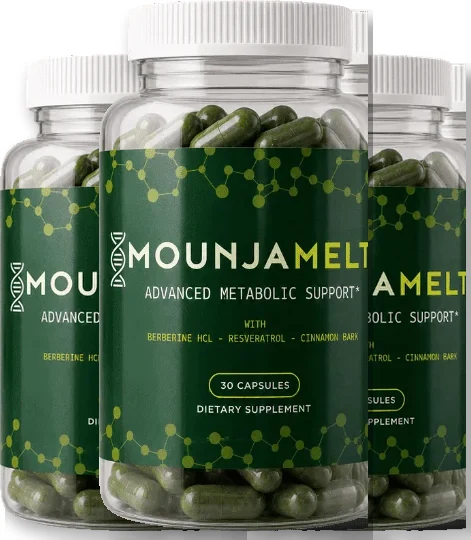
See the standardized green tea dose in MounjaMelt
Every ingredient, the per-serving milligrams, the honest evidence, and today's pricing on the official store.
See MounjaMelt PricingThree myths about green tea and fat loss
Myth one: it works whether or not you change anything. This is the most expensive misunderstanding in the category. The measurable effects of catechins sit on top of a calorie deficit and physical activity; they do not create one. If your intake and movement stay exactly the same, a few percent bump in fat oxidation is unlikely to show up on the scale. Treat green tea as a multiplier on your effort, and the maths only works when there is effort to multiply.
Myth two: a stronger extract always means faster results. The dose-response curve here is flat, not steep. Once you reach a standardised, moderate amount of catechins, piling on more does not linearly increase fat burning — but it does increase the odds of side effects and, in the case of very high concentrated doses, the rare liver concern discussed below. "Clinically studied dose" beats "mega-dose" every time.
Myth three: green tea and prescription weight-loss medicine are interchangeable. They are not remotely in the same class. GLP-1 medications produce large, pharmacological appetite and weight effects; green tea produces a small metabolic nudge. If you want the honest comparison of natural options against the drug hype, our review of berberine and the "natural GLP-1" weight-loss evidence lays out where those claims hold up and where they collapse.
Is green tea extract safe? The liver question
For the overwhelming majority of people, green tea is one of the safest things they consume all day. Brewed green tea has been drunk for centuries with no drama, and moderate supplemental doses are well tolerated. The nuance is specific: rare cases of liver injury have been reported with high-dose concentrated green tea extract, disproportionately when it is taken on an empty stomach and at amounts well above what studies use. It is an uncommon, idiosyncratic reaction rather than a predictable dose-dependent poisoning, but it is real enough that regulators and researchers flag it.
The practical takeaways are simple. Stay within labelled amounts and do not stack multiple high-dose extracts at once. Taking it with food is sensible. If you have existing liver conditions, are pregnant or nursing, or take medication, clear it with a clinician first — a point we make in more depth in our guide to weight-loss supplement side effects and safety. None of this makes green tea dangerous; it makes the case for a standardised dose rather than a "more is more" fat burner.
Where green tea fits in a wider fat-loss plan
Green tea is a supporting actor, and it plays best in a well-cast production. The lead roles belong to a modest calorie deficit, adequate protein, and enough daily movement to keep your metabolism responsive. Catechins then do their small job of helping you burn a fraction more fat for the effort you are already putting in. Thermogenic ingredients tend to cluster, and green tea sits naturally alongside cayenne and capsaicin for thermogenic fat loss, which nudges the same calorie-burn and appetite levers through a different receptor. Capsaicin is the worked example, with its own meta-analysis of human studies: Zsiborás et al. Capsaicin and capsiate could be appropriate agents for treatment of obesity: a meta-analysis of human studies. Critical Reviews in Food Science and Nutrition, 2018.
Timing is a minor lever, not a magic one. Because the effect leans on caffeine, most people take a green-tea-containing formula earlier in the day and pair it with activity, both to line up the mechanism and to avoid disturbed sleep. Consistency matters far more than clever scheduling. An ingredient taken every morning for eight to twelve weeks tells you something; an ingredient taken sporadically for ten days tells you nothing.
Brewed tea, matcha or a standardized extract?
A fair question is whether you even need a supplement when you could simply drink the tea. The answer turns on dose and consistency. A typical cup of brewed green tea delivers a variable and fairly modest amount of catechins, and that amount swings with the leaf, the water temperature and how long you steep it. To reach the catechin levels used in the metabolism studies from brewed tea alone, you would need to drink several strong cups a day, every day, without missing one. Matcha, made from whole powdered leaf, is more concentrated, but it is still an inconsistent way to hit a specific target.
A standardised extract solves the consistency problem. It delivers a known quantity of catechins, standardised for EGCG, in the same amount every day — which is exactly what a fair trial of any ingredient requires. That reliability is the practical argument for a capsule over a mug: not that tea does not work, but that you cannot easily control the dose you are getting from it, and an uncontrolled dose makes an uncertain test.
The trade-off is the one already covered. A concentrated extract is where the rare liver-safety signal lives, which is why the sensible target is a standardised, moderate dose rather than the biggest number on the shelf. Brewed tea is essentially risk-free and a genuinely healthy habit; a mega-dosed extract carries the caveat. A well-formulated supplement sits between the two, giving you a reliable, studied dose without straying into megadose territory. If you enjoy drinking tea, keep drinking it. If you want a controlled catechin dose alongside the rest of a metabolic formula, that is precisely what a standardised extract is for.
How MounjaMelt uses a standardized catechin dose
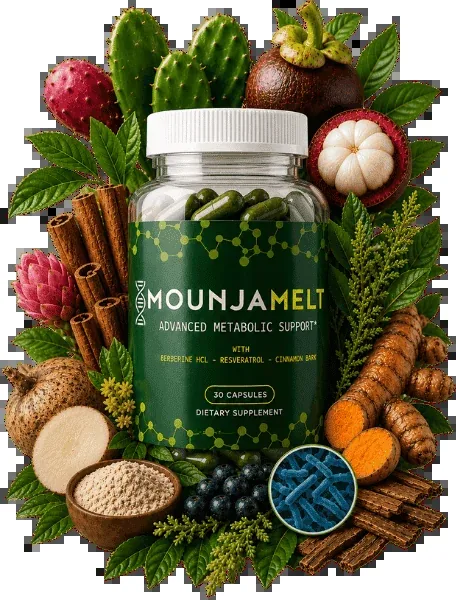
MounjaMelt is built around this honest reading of the science. Rather than chasing a headline-grabbing megadose, it pairs a standardised amount of green tea catechins with the other levers that make a calorie deficit easier to sustain — the caffeine synergy for thermogenesis, plus complementary ingredients aimed at cravings and blood-sugar handling. The goal is a once-daily capsule that gives you the small, credible metabolic tailwind the research supports, at a dose that respects the liver-safety caveat rather than ignoring it.
That is the whole philosophy: match the label to the literature, state the milligrams, and let the diet and the activity do the heavy lifting. If you want to see exactly how the catechin dose is put together with the rest of the formula, the full MounjaMelt formula and pricing breakdown lays out every ingredient and the current offer on the official store.
Medical note: this article is general information, not medical advice. Dietary supplements are not intended to diagnose, treat, cure or prevent any disease. Speak to a healthcare professional before starting any supplement, especially if you are pregnant, nursing, have a liver condition, or take medication — concentrated green tea extract can interact with some drugs.
Frequently asked questions
Does green tea extract burn belly fat?
Not directly, and not on its own. Green tea catechins can produce a small increase in fat oxidation and daily energy expenditure, but that effect is modest and works across the whole body rather than targeting the belly. Any visible change to waistline fat comes from the overall calorie deficit the catechins gently support, not from spot reduction.
How do green tea catechins boost metabolism?
Catechins such as EGCG slow the breakdown of noradrenaline, the signal that tells fat cells to release energy and mildly raises heat production. Paired with the caffeine naturally present in green tea, this thermogenic effect can lift resting metabolic rate by a small margin. The lift is real but measured in a few percent, not double-digit gains.
Is green tea extract safe for your liver?
For most people at sensible doses it is well tolerated, and drinking brewed green tea is not a concern. Rare cases of liver injury have been linked to high-dose green tea extract, usually taken on an empty stomach, which is why staying within labelled amounts matters. If you have liver problems or take medication, speak to a clinician before using any concentrated extract.
How much green tea catechin is effective for weight loss?
Studies that saw a small effect typically used a few hundred milligrams of catechins a day, often standardised for EGCG and combined with roughly 100 to 200 milligrams of caffeine. More is not better, and megadoses raise the safety concern rather than the benefit. A standardised, moderate dose taken consistently alongside activity is the sensible target.
Scientific references
- NIH NCCIH — Green Tea: What You Need To Know
- NIH Office of Dietary Supplements — Dietary Supplements for Weight Loss
- LiverTox — Green Tea (Camellia sinensis) hepatotoxicity
- Hursel R et al. The effects of catechin rich teas and caffeine on energy expenditure and fat oxidation: a meta-analysis. Obes Rev, 2011
- FTC — Health Products Compliance Guidance (weight-loss claims)
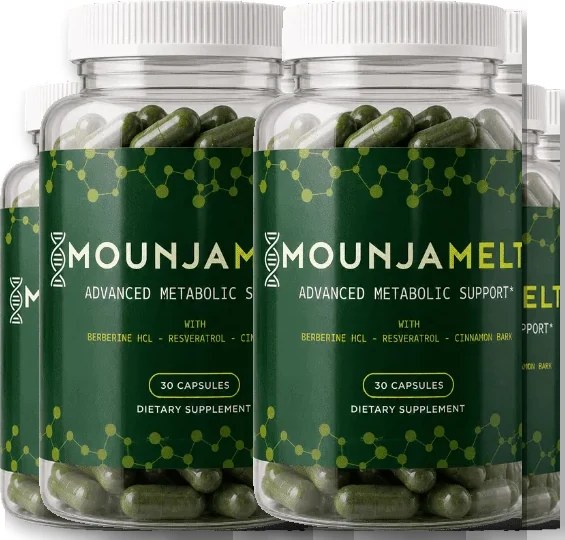
See how MounjaMelt puts this together
A standardized catechin dose, the caffeine synergy, and the honest evidence — with today's pricing on the official store.
Check Availability