Berberine as a Natural GLP-1 for Weight Loss
Quick Answer: Do Berberine and Its Shelf-Mates Help Weight Loss?
Berberine is often called a natural GLP-1, and human trials show small, real improvements in weight and metabolic markers when it is used with diet and activity. It is a plant compound, not a GLP-1 drug, so its effect is gentler than prescription medication. Glucomannan, green tea catechins and chromium are other common natural options, and each works in its own way.
- Strongest finding: glucomannan supports satiety in an energy-restricted diet (accepted by EFSA).
- Most hyped: berberine — real but modest; not a GLP-1 drug.
- Key caveat: support, not a cure — results depend on diet and activity.
Why berberine got the "natural Ozempic" nickname — and why it is misleading
Berberine is a plant alkaloid found in herbs like goldenseal and barberry. It became a social-media sensation when videos framed it as a cheap, natural version of GLP-1 medications such as semaglutide (Ozempic) and tirzepatide. The kernel of truth is real: berberine does have human trials, mostly in people with metabolic conditions, showing modest reductions in body weight, fasting blood sugar and cholesterol, likely through activation of the AMPK energy-sensing pathway.
But the comparison collapses under scrutiny. GLP-1 drugs are receptor agonists that produce large, clinically dramatic appetite and weight effects; berberine is not a GLP-1 agonist and does not act on that receptor in the same way. Meta-analyses put berberine's average weight effect at a couple of kilograms — helpful as support, nowhere near a prescription result. Calling it "nature's Ozempic" is marketing, not pharmacology. The dose-response meta-analysis behind that sentence is Xiong et al. The effect of berberine supplementation on obesity indices: a dose-response meta-analysis and systematic review of randomized controlled trials. Complementary Therapies in Clinical Practice, 2020.
The rest of the natural weight-support shelf
Berberine rarely travels alone. The other ingredients that fill this category each do a different, smaller job:
Glucomannan is the quiet standout. It is a soluble fibre from konjac root that absorbs water and expands in the stomach, blunting appetite. The European Food Safety Authority accepted that glucomannan contributes to weight reduction as part of an energy-restricted diet — a rare regulatory nod for a supplement ingredient. Green-tea catechins (EGCG) show a small increase in energy expenditure and fat oxidation in meta-analyses, clearest when paired with caffeine and exercise. Chromium supports normal glucose metabolism but its direct weight evidence is weak, and cayenne's thermogenic effect is minor. The pooled figures are Zalewski et al. The effect of glucomannan on body weight in overweight or obese children and adults: a systematic review of randomized controlled trials. Nutrition, 2015 for glucomannan and Hursel et al. The effects of catechin rich teas and caffeine on energy expenditure and fat oxidation: a meta-analysis. Obesity Reviews, 2011 for green tea and caffeine.
What the evidence supports, in one table
| Ingredient | What the research supports |
|---|---|
| Glucomannan | Satiety; weight reduction with a calorie-restricted diet (EFSA accepted) |
| Green tea (EGCG) | Small rise in energy expenditure / fat oxidation, best with caffeine + exercise |
| Berberine | Modest weight and metabolic effect; not a GLP-1 drug |
| Chromium | Normal glucose metabolism; weak direct weight evidence |
| Cayenne (capsaicin) | Minor thermogenic and satiety nudge |
What else sits in a berberine-based formula — the four ingredients this shelf ignores
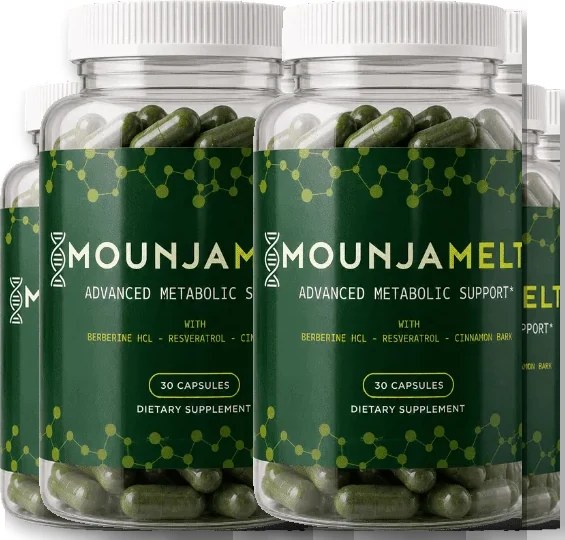
The list above is the shelf as the internet discusses it. It is not the shelf as it is actually sold. A finished metabolic capsule usually carries several supporting ingredients that never make the headlines, and MounjaMelt is a fair example: alongside berberine and green-tea extract it names cinnamon bark, gymnema sylvestre, L-carnitine, resveratrol and chromium. Each of those has its own literature, and none of it is dramatic.
Cinnamon bark has a dose-response meta-analysis of randomized trials behind it showing small favourable changes in body weight and waist measures, with the usual caveat that most participants had a metabolic problem to begin with. Gymnema sylvestre is best known for temporarily blunting sweet taste, and a randomized comparison against berberine in people with obesity measured both on adipokines and body composition rather than leaving it to folklore. L-carnitine is the most over-claimed name on any fat-burner label: pooled across dozens of randomized trials it produces a small average weight reduction, and nothing resembling the "fat transporter" marketing built around it. Resveratrol is the clearest example of laboratory promise outrunning human results, and an umbrella review of meta-analyses in metabolic populations is markedly more restrained than the press coverage was. The four pooled sources are Mousavi et al. Cinnamon supplementation positively affects obesity: a systematic review and dose-response meta-analysis of randomized controlled trials. Clinical Nutrition, 2020, Bandala et al. Comparative effects of Gymnema sylvestre and berberine on adipokines, body composition and metabolic parameters in obese patients: a randomized study. Nutrients, 2024, Talenezhad et al. Effects of l-carnitine supplementation on weight loss and body composition: a systematic review and meta-analysis of 37 randomized controlled clinical trials with dose-response analysis. Clinical Nutrition ESPEN, 2020 and Zeraattalab-Motlagh et al. The effects of resveratrol supplementation in patients with type 2 diabetes, metabolic syndrome and non-alcoholic fatty liver disease: an umbrella review of meta-analyses of randomized controlled trials. American Journal of Clinical Nutrition, 2021.
The supporting cast, graded honestly
| Ingredient | What the human evidence supports | Grade |
|---|---|---|
| Cinnamon bark | Small reductions in weight and waist in pooled randomized trials | Modest |
| Gymnema sylvestre | Sweet-taste suppression; small metabolic changes in a randomized comparison | Limited |
| L-carnitine | Small average weight reduction across pooled trials; far below its marketing | Small |
| Resveratrol | Inconsistent human results despite strong laboratory rationale | Weak |
| Chromium | Normal macronutrient metabolism; weak direct weight evidence | Weak |
Read that table next to the first one and a pattern appears. Nothing here is a lever on its own. The design argument for a multi-ingredient capsule is coverage rather than potency: several small, honest effects pointed at the same outcome. If cravings rather than metabolism are your actual problem, our piece on chromium picolinate and sugar cravings explains why that particular mineral gets its place, and the fuller picture on catechins is in our guide to green tea catechins, fat burning and metabolism.
How much berberine did the trials use, and why labels rarely match
Most berberine trials use roughly 500 mg two or three times a day — about 1,000 to 1,500 mg in total — taken with meals over eight to twelve weeks. The split is not arbitrary. Berberine is poorly absorbed from the gut, so the research protocols divide the dose to keep exposure steady rather than relying on one large capsule. The absorption problem is reviewed in Liu et al. Research progress on berberine with a special focus on its oral bioavailability. Fitoterapia, 2016.
This creates the single most common mismatch in the category. A once-daily multi-ingredient capsule cannot physically hold three trial doses of berberine plus six other ingredients, and many labels do not publish the milligram amount at all. When a product declines to state its amounts, you cannot line it up against the literature, and the honest response is proportionate caution rather than either faith or dismissal. That is the same standard we apply in our ranking of the best weight loss pills for 2026: full label, real doses, or a lower grade.
What the evidence shows — and what it does not
What it shows. Berberine produces small but measurable improvements in body weight, body mass index and glucose markers in randomized trials. Glucomannan supports satiety within an energy-restricted diet. Green-tea catechins with caffeine lift energy expenditure and fat oxidation slightly. These are real, replicated, unglamorous findings.
What it does not show. It does not show that any of these ingredients works without a calorie deficit underneath it. It does not show that a finished capsule performs like the isolated doses in the trials, because finished products are almost never tested as sold. It does not show durable effects past twelve weeks, because most trials stop there. And it does not show that berberine is comparable to a prescription medicine — a comparison we set out in full in our head-to-head on berberine versus GLP-1 medications.
How to run a fair test on berberine
If you are going to try it, run the experiment properly rather than half-heartedly. Take it consistently with meals for at least eight weeks, ideally twelve, because the effects here are metabolic and cumulative rather than immediate. Keep the rest of your routine steady for that window, since changing your diet, training and supplement in the same fortnight tells you nothing about which of the three did anything. Record two or three markers you can actually check — weight once a week at the same time of day, waist measurement once a month, and a one-line note on cravings — and set the decision date when you start, not when you get impatient.
Then judge it against the right benchmark. A couple of kilograms over three months, on top of a diet you were already following, is what the pooled data predict. That is a pass, not a failure, for an ingredient in this class.
Common mistakes with berberine
Taking it on an empty stomach. Trial protocols take it with meals, which is also where the digestive complaints are mildest. Expecting a drug timeline. Two weeks is a tolerance test, not an efficacy test. Assuming natural means interaction-free. Berberine lowers blood sugar and affects drug-metabolising enzymes, which is why it deserves a conversation with a pharmacist if you take anything regularly — our overview of weight-loss supplement side effects and safety covers this properly. Buying on the ingredient name alone. The name on the front of the bottle is not the dose inside it.
Where the evidence stops
Two honest limitations are worth stating plainly. First, a finished multi-ingredient supplement is not the same as any single studied dose — the ingredients can each have evidence while the specific product has never been trialled. Always check a label's milligram amounts against what the studies actually used. Second, none of this replaces the fundamentals: every credible study of these ingredients sits on top of a calorie-aware diet and some activity. A supplement is, at best, a modest tailwind — not the engine.
Medical note: this article is general information, not medical advice. Speak to a healthcare professional before starting any supplement, especially if you are pregnant, nursing, or taking medication — berberine in particular interacts with several drugs and can lower blood sugar.
Scientific references
- NIH Office of Dietary Supplements — Dietary Supplements for Weight Loss
- NIH NCCIH — Green Tea: What You Need To Know
- EFSA — Scientific Opinion on glucomannan and reduction of body weight
- Xiong P et al. The effect of berberine supplementation on obesity indices: a dose-response meta-analysis and systematic review of randomized controlled trials. Complement Ther Clin Pract, 2020
- Zalewski BM et al. The effect of glucomannan on body weight in overweight or obese children and adults: a systematic review of randomized controlled trials. Nutrition, 2015
- FTC — Health Products Compliance Guidance (weight-loss claims)
Frequently asked questions
Is berberine really "nature's Ozempic"?
No. That nickname oversells it. Berberine has human trials, mostly in people with metabolic conditions, showing modest reductions in weight and blood sugar, probably through the AMPK energy pathway. But it is not a GLP-1 receptor agonist and does not act like semaglutide. Meta-analyses put its average weight effect at a couple of kilograms, a fraction of what prescription GLP-1 medications produce.
How much berberine did the studies use?
Most berberine trials used around 500 milligrams two or three times a day, roughly 1,000 to 1,500 milligrams total, taken with meals over several weeks to months. A finished multi-ingredient supplement may contain far less, so check the label's milligram amount against what the studies used rather than assuming the product matches the research.
Which natural ingredient has the strongest weight-loss evidence?
Glucomannan has the most accepted evidence. It is a soluble konjac fibre that absorbs water and expands in the stomach to blunt appetite, and the European Food Safety Authority accepted that it contributes to weight reduction as part of an energy-restricted diet. Green-tea catechins show a small metabolic effect, while chromium's direct weight evidence is weak.
Is berberine safe to take?
For many people it is well tolerated, but berberine interacts with several medications and can lower blood sugar, so it is not risk-free. Digestive upset is the most common complaint. Anyone pregnant, nursing, or taking prescription drugs, especially for diabetes or blood pressure, should speak to a clinician before starting it rather than assuming a natural label means no interactions.
Does berberine work as a natural GLP-1 supplement?
Berberine is a plant compound that supports weight and metabolic markers modestly in human trials, and it works best with a calorie-aware diet and regular activity. It is not a GLP-1 drug, so expect a gentle, gradual effect.
See how MounjaMelt puts this together
Every ingredient, the honest evidence, and the current sale price.
Read the Full Review