Berberine vs GLP-1 Medications: What the Comparison Actually Shows
Quick Answer: Is Berberine Comparable to a GLP-1 Medication?
No — not in mechanism and not in size of effect. Berberine is a plant alkaloid that acts upstream on the AMPK energy pathway; a GLP-1 medication is a prescription drug that copies a gut hormone at its own receptor. Pooled berberine trials report an average reduction of roughly a couple of kilograms, mostly in people with metabolic conditions. The 68-week semaglutide trial reported an average body-weight change of about 14.9 per cent against 2.4 per cent on placebo. Both can be worth taking for different reasons; only one of them is a drug, and treating them as interchangeable is how people end up disappointed.
- Mechanism: different pathways entirely — berberine does not bind the GLP-1 receptor.
- Magnitude: roughly an order of magnitude apart in the trial data.
- Key caveat: never stop a prescribed medicine in favour of a supplement.
Is berberine the same thing as a GLP-1 medication?
Berberine is not the same thing as a GLP-1 medication, and the difference is structural rather than a matter of degree. GLP-1 receptor agonists such as semaglutide and tirzepatide are engineered molecules that bind the glucagon-like peptide-1 receptor and hold that signal open for days at a time. Berberine binds nothing of the sort. It is an isoquinoline alkaloid found in barberry, goldenseal and coptis, and its best-described action is the activation of AMP-activated protein kinase, a cellular fuel gauge that shifts a cell toward burning rather than storing energy.
The nickname that muddles this — "nature's Ozempic" — came from social media, not from a laboratory. It survives because there is a kernel of truth underneath it: berberine really does move fasting glucose, cholesterol and weight in the right direction in controlled trials. What the nickname smuggles in is the idea that it does so at a comparable scale, and that is where the claim breaks. Our longer piece on the berberine and natural GLP-1 weight-loss evidence walks through the individual trials in detail; this page is about the head-to-head comparison people actually search for.
How much weight does each one actually produce?
This is the only question that settles the argument, and both sides of it have published numbers, so there is no need to guess.
What the semaglutide trials measured
The pivotal 68-week trial of once-weekly semaglutide 2.4 mg in adults with overweight or obesity reported a mean change in body weight of about 14.9 per cent, against 2.4 per cent in the placebo group, with both arms receiving lifestyle counselling. That is a large, sustained, drug-scale effect, and it was measured against placebo in thousands of participants. Network meta-analyses that line up seven different GLP-1 receptor agonists and dual agonists put tirzepatide higher still and confirm the class effect rather than a single lucky result. The trial is Wilding et al. Once-weekly semaglutide in adults with overweight or obesity. New England Journal of Medicine, 2021; the class comparison is Xie et al. Seven glucagon-like peptide-1 receptor agonists and polyagonists for weight loss in patients with obesity or overweight: an updated systematic review and network meta-analysis. Metabolism, 2024.
What the berberine meta-analyses measured
Berberine's evidence base is smaller, shorter and drawn largely from people with metabolic syndrome, type 2 diabetes or non-alcoholic fatty liver disease rather than from otherwise healthy people seeking weight loss. A dose-response meta-analysis of randomized controlled trials found statistically significant but modest reductions in body weight and body mass index, typically in the region of a couple of kilograms over eight to twelve weeks. A separate systematic review of the metabolic-syndrome components reaches the same shape of conclusion: real signal, small size, and heterogeneity between trials that should keep anyone honest about the average. Those two analyses are Xiong et al. The effect of berberine supplementation on obesity indices: a dose-response meta-analysis and systematic review of randomized controlled trials. Complementary Therapies in Clinical Practice, 2020 and Liu et al. Efficacy and safety of berberine on the components of metabolic syndrome: a systematic review and meta-analysis of randomized placebo-controlled trials. Frontiers in Pharmacology, 2025.
Berberine vs GLP-1 medicines, side by side
| Berberine | GLP-1 receptor agonists | |
|---|---|---|
| What it is | Plant alkaloid sold as a dietary supplement | Prescription-only injectable or oral medicine |
| Main mechanism | AMPK activation; effects on gut and glucose handling | Direct agonism at the GLP-1 receptor |
| Typical trial length | 8 to 12 weeks | 68 weeks in the pivotal trial |
| Average weight effect | Roughly a couple of kilograms in pooled analyses | About 14.9% of body weight vs 2.4% on placebo |
| Who was studied | Mostly people with metabolic conditions | Adults with overweight or obesity |
| Access and cost | Over the counter, low monthly cost | Prescription, clinical supervision, high cost |
| Common complaints | Digestive upset, cramping, interactions | Nausea, vomiting, diarrhoea, discontinuations |
Read the table left to right and the honest conclusion writes itself. These are not competitors on the same ladder. One is a medicine with a large effect, a prescription gate and a monitoring requirement; the other is a supplement with a small effect, no gate and a low price. Our ranking of the best weight loss pills for 2026 places berberine among the better-evidenced supplement ingredients precisely because "better evidenced than its shelf-mates" and "comparable to a drug" are different statements.
How does each one work in the body?
GLP-1 receptor agonists copy a gut hormone
GLP-1 is a hormone your small intestine releases after a meal. It prompts insulin release when glucose is high, suppresses glucagon, slows how quickly the stomach empties, and signals satiety in the brain. The natural hormone is broken down within minutes. The drugs are built to resist that breakdown, so the post-meal signal that normally fades in minutes is held on for a week. The appetite suppression people describe on these medicines is that held signal, and it is why a calorie deficit becomes so much easier to maintain.
Berberine works upstream, through AMPK and the gut
Berberine's route is indirect. Activating AMPK shifts cellular metabolism toward glucose uptake and fatty-acid oxidation, which is a plausible mechanism for the modest improvements in fasting glucose and lipids that trials record. Berberine also alters the gut microbiota and has been studied for effects on bile-acid signalling. There is one further complication that supplement labels rarely mention: berberine is poorly absorbed. Oral bioavailability is low, which is a large part of why trial protocols use divided doses of around 500 mg two or three times daily with meals rather than a single capsule. The bioavailability problem is reviewed in Liu et al. Research progress on berberine with a special focus on its oral bioavailability. Fitoterapia, 2016.
What Spanish-language searches mean by "berberina o GLP-1"
A noticeable share of the questions reaching this site are in Spanish: berberina glp1, glp 1 o berberina. Berberina is simply the Spanish spelling of berberine, and the question is identical to the English one — whether the supplement can stand in for the injectable. The answer does not change with the language, and it is worth stating plainly for readers arriving from a Spanish-language search: berberina is a dietary supplement with a modest, real metabolic effect; a GLP-1 medicine is a prescription drug with a far larger and better-documented one. Anyone considering swapping between them should have that conversation with a clinician, in whichever language they prefer.
What the evidence shows — and what it does not
What it shows. Berberine produces small but statistically detectable improvements in body weight, body mass index, fasting glucose and lipid markers in randomized trials, most consistently in people who already have a metabolic problem to correct. GLP-1 receptor agonists produce large, sustained weight reduction in adults with overweight or obesity, replicated across a whole drug class.
What it does not show. It does not show that berberine acts on the GLP-1 receptor, that it approaches drug-scale weight loss, or that it works as well in healthy people as in the metabolically unwell populations most trials recruited. It does not show that any finished multi-ingredient capsule performs like the isolated doses used in trials, because those products are almost never tested as sold. And it does not show what happens beyond twelve weeks, because most berberine trials simply stop there.
That last gap matters more than it sounds. A supplement judged over eight weeks and a medicine judged over sixty-eight weeks are not being asked the same question, and the shorter answer will always look thinner.
Who each option is realistically for
A GLP-1 medication is for someone who meets the clinical criteria, has discussed it with a prescriber, and can tolerate both the side-effect profile and the cost. It is the correct answer when the amount of weight involved is medically significant.
Berberine, or a formula built around it, is for someone who does not meet those criteria or does not want that route, who is already working on diet and activity, and who wants a modest metabolic tailwind at supplement prices. It suits a person whose main problem is blood-sugar swings and the cravings that follow them more than a person whose main problem is raw appetite volume. If that sounds like the wrong lever for you, our guide to natural alternatives to Mounjaro and GLP-1 drugs covers the other botanical options and where each of them stops.
Five mistakes people make when comparing the two
Stopping a prescription to "try natural first." This is the mistake with real consequences. A prescribed medicine is discontinued with the person who prescribed it, not on the strength of a supplement's marketing.
Expecting a supplement timeline to match a drug timeline. Appetite suppression on a GLP-1 medicine is often obvious within weeks. Berberine's effects are metabolic and cumulative; eight to twelve consistent weeks is the minimum fair test, and a fortnight tells you nothing.
Ignoring the dose split. Because absorption is poor, trials divide berberine across meals. A single daily capsule containing a fraction of the trial dose is not the same intervention, however well it is marketed.
Assuming "natural" means "no interactions." Berberine lowers blood sugar and affects drug-metabolising enzymes. Stacking it on top of glucose-lowering medication without advice is the most common way this ingredient causes a problem. Our overview of weight-loss supplement side effects and safety goes through the interactions in detail.
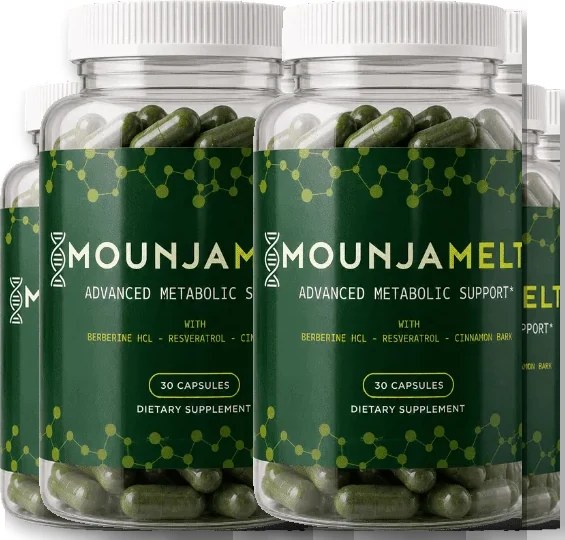
Judging a multi-ingredient product by a single-ingredient study. A capsule that names berberine is not the trial dose of berberine, and a formula that publishes no milligram amounts cannot be checked against the literature at all. Our assessment of whether MounjaMelt actually works is explicit that its per-capsule amounts were never published.
Safety, interactions and cost
Berberine is generally well tolerated at studied doses, with digestive complaints — cramping, constipation, diarrhoea — the usual reason people stop. The interactions matter more than the side effects: it can lower blood sugar, which stacks with diabetes medication, and it inhibits enzymes involved in clearing other drugs. Pregnancy and nursing are firm reasons to avoid it. GLP-1 medicines carry their own well-documented profile, dominated by nausea and gastrointestinal effects, and they are prescribed with monitoring for exactly that reason.
On cost, the gap runs the other way. A month of a berberine-based supplement typically costs a fraction of a month of a branded GLP-1 medicine. For some people that difference is the entire decision, and there is nothing dishonest about choosing the cheaper, milder tool as long as the expectation is set at the size of its evidence rather than the size of the drug's.
Medical note: this article is general information, not medical advice. Never start, stop or change a prescription medication on the basis of a web page. Speak to a healthcare professional before starting any supplement, especially if you are pregnant, nursing, or taking medication — berberine in particular interacts with several drugs and can lower blood sugar.
Scientific references
- Wilding JPH et al. Once-weekly semaglutide in adults with overweight or obesity. N Engl J Med, 2021
- Xie Z et al. Seven glucagon-like peptide-1 receptor agonists and polyagonists for weight loss in patients with obesity or overweight: an updated systematic review and network meta-analysis. Metabolism, 2024
- Xiong P et al. The effect of berberine supplementation on obesity indices: a dose-response meta-analysis and systematic review of randomized controlled trials. Complement Ther Clin Pract, 2020
- Liu D et al. Efficacy and safety of berberine on the components of metabolic syndrome: a systematic review and meta-analysis of randomized placebo-controlled trials. Front Pharmacol, 2025
- Liu CS et al. Research progress on berberine with a special focus on its oral bioavailability. Fitoterapia, 2016
- NIH NCCIH — Berberine and weight loss: what you need to know
Frequently asked questions
Is berberine a natural GLP-1?
No. Berberine is not a GLP-1 receptor agonist and does not bind the GLP-1 receptor the way semaglutide or tirzepatide do. It is a plant alkaloid that acts further upstream, mainly through the AMPK energy-sensing pathway and through changes in the gut. The nickname is marketing shorthand, not pharmacology, and the two produce results of completely different sizes.
How much more weight do GLP-1 medications produce than berberine?
The gap is roughly an order of magnitude. In the 68-week semaglutide trial the average body-weight change was about 14.9 percent against 2.4 percent on placebo. Pooled berberine trials report an average reduction of a couple of kilograms, usually in people with metabolic conditions and usually over eight to twelve weeks. Both numbers are averages, and individual results vary widely.
Can I take berberine instead of my prescription?
Not on your own initiative. Berberine is not a substitute for a prescribed medication, and stopping a prescription in favour of a supplement is a decision for the clinician who prescribed it. Berberine also lowers blood sugar and interacts with several drugs, so combining it with diabetes or blood-pressure medication needs medical advice rather than guesswork.
Why do Spanish searches ask about berberina y GLP-1?
Because the same social-media claim travels in both languages. Berberina is simply the Spanish spelling of berberine, and the question behind the search is identical: whether the supplement can stand in for an injectable. The answer does not change with the language. Berberine offers modest metabolic support; a GLP-1 medicine is a prescription drug with a far larger and better-documented effect.

See where MounjaMelt sits in this comparison
Every ingredient, the honest evidence, and the current sale price.
Read the Full Breakdown