MounjaMelt Reviews: What to Expect in 2026
Does MounjaMelt Really Work, According to the Reviews?
MounjaMelt reviews describe modest, realistic support rather than dramatic change. It is an over-the-counter supplement built on appetite and metabolism actives that can sit alongside a calorie-controlled diet over about eight consistent weeks. It works with your effort, not instead of it, and it is not a drug.
- What it does: gently supports appetite control, metabolism and blood-sugar handling.
- What it will not do: replicate a prescription injection or melt fat while you eat freely.
- Fair-trial tip: give it several weeks of daily use alongside a modest deficit before judging.
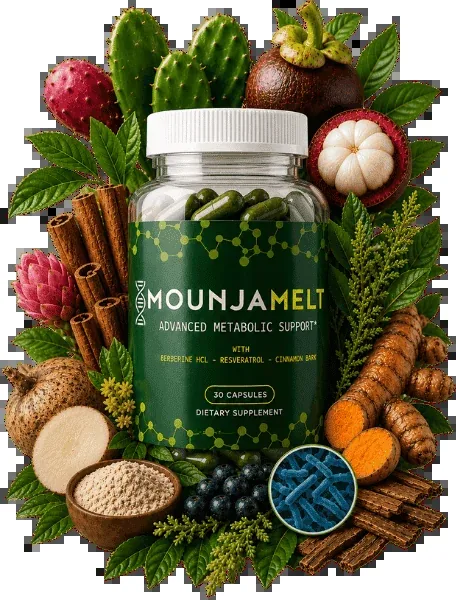
If you are reading MounjaMelt reviews, you have almost certainly already seen the product name and want the honest bottom line: does it really work, and is it worth your money? This review is written for exactly that moment. We are an independent affiliate publisher, so we read the label and the primary research rather than the sales copy, and we will tell you plainly where the evidence is solid and where the marketing gets ahead of it. The short version is that MounjaMelt is a legitimate five-ingredient support supplement with realistic over-the-counter potential, not a miracle and not the prescription medicine it is frequently confused with.
That distinction matters more than any single ingredient, so we will start there and then work through what the formula can actually deliver, how long it takes, the objections worth taking seriously, and who should skip it entirely.
What MounjaMelt actually is
MounjaMelt is a once-daily dietary supplement aimed at weight-management support. The label names seven ingredients: berberine HCl, cinnamon bark extract, resveratrol, gymnema sylvestre, chromium, L-carnitine and green tea extract. None of these is exotic, and the grouping has an internal logic — berberine, cinnamon bark, gymnema and chromium all act on glucose handling and sweet cravings, while green tea extract and L-carnitine sit on the fat-metabolism side. What the label does not give you is the amount of each one, and that matters for everything that follows. L-carnitine is the clearest example of a familiar name with a small pooled effect — Talenezhad et al. Effects of l-carnitine supplementation on weight loss and body composition: a systematic review and meta-analysis of 37 randomized controlled clinical trials with dose-response analysis. Clinical Nutrition ESPEN, 2020.
Berberine is the headline act, a plant compound studied for its effect on blood-sugar handling and metabolic signalling. Green tea catechins, paired with the naturally occurring caffeine, are associated with a small lift in energy expenditure and fat oxidation. Chromium plays a supporting role in how the body responds to insulin and can take some of the edge off sugar cravings. Cayenne contributes a mild thermogenic nudge. Glucomannan is the appetite piece: a soluble fibre that absorbs water, expands gently in the stomach and helps a meal feel more filling. Taken together, the design intent is coordinated support across cravings, energy use and blood-sugar stability from a single capsule.
Crucially, MounjaMelt is not a prescription drug and makes no claim to be one. It does not contain semaglutide, tirzepatide or any pharmaceutical GLP-1 agonist. If your goal specifically is prescription-grade appetite suppression, read our honest comparison of the natural alternatives to Mounjaro and GLP-1 drugs before you buy anything, because a supplement and an injectable are simply different tools with different ceilings. The size of that gap is set out in our comparison of berberine and GLP-1 medications.
What the MounjaMelt reviews really tell you
Read enough MounjaMelt reviews and a pattern emerges that is more useful than any single star rating. The people who report a genuine result almost all describe the same setup: they took the capsule daily for weeks, not days, and they paired it with some deliberate change to how they ate. The people who report nothing tend to describe the opposite, one bottle taken erratically with no dietary change, then a shrug.
This is exactly what you would predict from the ingredients. Berberine and green tea act on slow metabolic machinery; glucomannan only curbs appetite if it is actually in your stomach before a meal. A supplement like this cannot manufacture a calorie deficit on its own, and honest reviews reflect that. When you weigh the feedback, weight the process behind each review more heavily than the outcome, because the process is what you can copy.
The other thing the reviews reveal is expectation mismatch. A share of disappointed feedback comes from people who bought MounjaMelt expecting it to behave like the prescription medication with a similar-sounding name. It will not, and no over-the-counter capsule will. Once you set the expectation at over-the-counter support rather than pharmaceutical potency, the reviews become far more consistent and far more positive.
What each ingredient can and cannot do
Honesty means separating the plausible from the hopeful. Here is the fair read on the main ingredients.
Berberine has the strongest research base of the group for metabolic and blood-sugar support, which is why it is sometimes called nature's metabolic helper. It is a genuine active with real effects, but it is not a fat-loss guarantee, and its benefits show up over weeks. Our deep dive into berberine and the natural GLP-1 weight-loss evidence lays out what the trials actually found. The dose-response meta-analysis behind that summary is Xiong et al. The effect of berberine supplementation on obesity indices: a dose-response meta-analysis and systematic review of randomized controlled trials. Complementary Therapies in Clinical Practice, 2020.
Green tea catechins plus caffeine can modestly raise energy expenditure, but the effect is small and partly blunted if you already drink a lot of caffeine. Chromium may help with sugar cravings for some people and does little for others; the evidence is mixed but the safety margin is wide. Cinnamon bark and gymnema sylvestre are both traditional blood-sugar botanicals whose human trials are small and inconsistent. L-carnitine is well understood as a fatty-acid transporter, but supplementing it does not reliably increase fat loss in people who are not deficient, and resveratrol’s metabolic results in humans have been far more modest than the early laboratory work promised. For green tea the pooled figure comes from Hursel et al. The effects of catechin rich teas and caffeine on energy expenditure and fat oxidation: a meta-analysis. Obesity Reviews, 2011; for resveratrol, the umbrella review is Zeraattalab-Motlagh et al. The effects of resveratrol supplementation in patients with type 2 diabetes, metabolic syndrome and non-alcoholic fatty liver disease: an umbrella review of meta-analyses of randomized controlled trials. American Journal of Clinical Nutrition, 2021.
What none of them can do is override a calorie surplus. If more energy comes in than goes out, no combination of these actives will produce fat loss. They tilt the odds; they do not rewrite arithmetic.
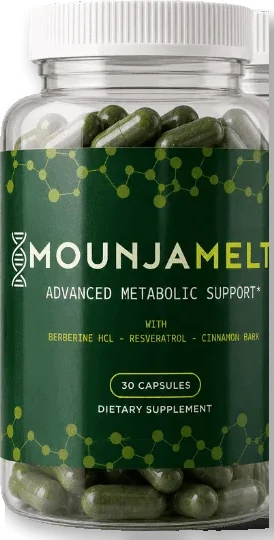
Want the full ingredient breakdown and today's price?
See every ingredient named on the MounjaMelt label, with current 2, 3 and 6-bottle pricing on the official store.
Check MounjaMelt AvailabilityHow long before MounjaMelt works, and what results are realistic
This is where most disappointment is manufactured, so let us be precise. MounjaMelt is not a next-day product. Berberine's metabolic effects accrue over weeks; the cravings side from cinnamon bark and gymnema builds only as a consistent daily habit; and the green tea contribution is small and cumulative. A fair trial is several consistent weeks, and most reviewers who report a change describe it over roughly eight weeks.
On magnitude, set your expectation at over-the-counter reality: something in the region of 5 to 10 pounds across about eight weeks, provided you hold a modest calorie deficit at the same time. That is a genuinely useful result for a natural capsule, and it compounds if you keep going. It is also nowhere near what a prescription injectable can do, which is precisely why the two should never be sold as interchangeable. If you want the wider landscape, our roundup of the best weight-loss pills of 2026 and what actually works puts those numbers in context against the rest of the category.
Judge a metabolic supplement at eight weeks, not at eight days. Eight days tells you about tolerance; eight weeks tells you about effect.
Three objections worth taking seriously
"It's just the same as the injection with a cheaper name." No. MounjaMelt is a botanical supplement and contains no prescription GLP-1 medicine. The similar-sounding name is a marketing choice across this whole category, not a shared formula. Buy it for what it is, an over-the-counter support blend, and the value proposition holds; buy it as a drug substitute and you will feel misled.
"Supplements like this do nothing at all." This overcorrects in the other direction. Several of these ingredients, berberine and glucomannan especially, have legitimate published effects. The honest position sits in the middle: they do something measurable but modest, and only when the rest of your routine cooperates.
"If it doesn't work fast, it's a scam." Speed is not the same as legitimacy. The ingredients that work quickly in this space are usually stimulants that spike and fade; the ingredients that work slowly, like berberine, are the ones with staying power. A product that promises overnight results is the one to distrust. Before you start, it is also worth reading how weight-loss supplement side effects and safety compare, so your expectations on tolerability are set as carefully as your expectations on results.

How to take MounjaMelt for the best shot at results
The protocol is deliberately simple: one capsule daily. Take it with a large glass of water, which matters because the glucomannan fibre needs fluid to expand and do its job, and take it at roughly the same time each day so you do not miss doses. Many people take it shortly before their largest meal to make the most of the appetite effect, though the metabolic actives do not depend on timing.
Two practical notes. First, soluble fibre can slow the absorption of some oral medications, so separate MounjaMelt from any prescription by a couple of hours and check with a pharmacist if you take something with a narrow therapeutic window. Second, do not double up to chase faster results; the actives do not reward stacking, and more fibre simply means more bloating. If you are weighing whether to use it in bursts or as an ongoing habit, our piece on daily maintenance versus short-course use walks through both patterns.
Is MounjaMelt worth buying?
Whether MounjaMelt is worth buying comes down to a single honest question: are you willing to adjust your diet while you take it? If yes, it is a reasonable, convenient once-daily way to support appetite control and metabolism, and the value is genuine. If you want a pill that works while you change nothing, no supplement will satisfy you and this one will not either.
On format, MounjaMelt is sold in 2, 3 and 6-bottle packs. Because the formula needs several weeks to show anything, a single bottle rarely gives it a fair run, and the multi-bottle packs are both cheaper per bottle and better matched to how long a real trial takes. If you are going to test it properly, test it for long enough to know. The manufacturer's guarantee also means a fair trial does not have to be a gamble, and the current pricing across all three pack sizes is on the official store.
Medical note: this article is general information, not medical advice. Dietary supplements are not intended to diagnose, treat, cure or prevent any disease. Speak to a healthcare professional before starting MounjaMelt, particularly if you are pregnant, nursing, taking prescription medication, or managing a health condition such as diabetes.
Frequently asked questions
Does MounjaMelt really work for weight loss?
MounjaMelt can support weight loss, but only as a supplement working alongside a calorie deficit, not as a standalone fix. Its seven named ingredients are aimed at glucose handling and cravings, and honest over-the-counter results tend to land around 5 to 10 pounds across roughly eight consistent weeks. Anyone expecting drug-like results without changing how they eat will be disappointed.
How long does MounjaMelt take to show results?
Give it several consistent weeks. Berberine and green tea act on metabolic pathways that shift gradually, and the fibre effect on appetite builds as your routine settles. Most people who report a change describe it over about eight weeks of daily use paired with a modest calorie deficit, not within the first few days.
How do you take MounjaMelt?
The label directs one capsule daily, ideally with a large glass of water and around the same time each day so you do not miss doses. Because it contains soluble glucomannan fibre and actives that can affect blood sugar, take it consistently and separate it from prescription medication by a couple of hours unless a pharmacist advises otherwise.
Is MounjaMelt worth buying?
It is worth buying if you want convenient once-daily appetite and metabolic support and you are already willing to adjust your diet. It is sold in 1, 3 and 6-bottle packs, and because the actives need several weeks to show anything, the multi-bottle packs suit a fair trial better than a single bottle. It is not worth buying as a replacement for a prescription medication.
Is MounjaMelt a good supplement to try?
It is a once-daily capsule meant to support appetite control, metabolism and blood-sugar handling alongside your own effort. It is not a drug, and results vary from person to person.
Scientific references
Related reading
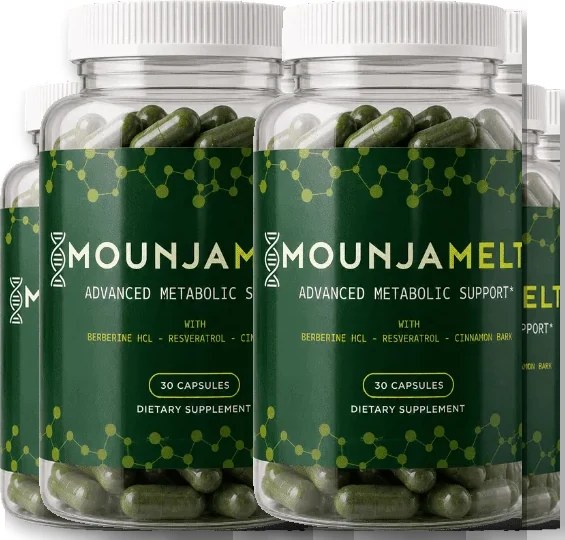
Ready to give MounjaMelt a fair eight-week trial?
See the current 1, 3 and 6-bottle pricing and the manufacturer's guarantee on the official store.
See MounjaMelt Pricing