Gut Health Daily Supplement vs Short Course: How Long to Take It For
Quick Answer: Daily Maintenance or a Short Course?
It depends on whether you are solving a temporary problem or maintaining a permanent one. A short course of four to eight weeks makes sense when something specific and time-limited has happened, such as a course of antibiotics, a travel upset or a sudden change in diet. Ongoing daily use makes sense only when the benefit clearly stops when you stop, and you have actually tested that by pausing. For most fibres and probiotics, the effect is tied to continued intake rather than banked, so "forever" is a real cost that deserves a real decision.
- Short course suits: a defined trigger with a defined end, judged at four to eight weeks.
- Daily maintenance suits: an ongoing gap you have confirmed by pausing and seeing the benefit fade.
- Key caveat: set your stop rule and decision date before you open the tub, not after.
The two patterns, defined properly
People use these words loosely, so it helps to pin them down. A short course is a defined block of time with a start, an end and a reason: you take something for four, eight or twelve weeks because a specific event happened, and then you stop and see where you are. A daily maintenance pattern has no end date; you take it because you believe you need it continuously.
There is a third pattern that gets far less attention and deserves more: situational use. This is taking something only when a known trigger appears, such as before a period of travel, during a stretch of unusually poor eating, or alongside a course of medication that upsets you. Situational use is honest about the fact that most supplements are patches for gaps rather than permanent nutritional infrastructure.
The reason the distinction matters is money and clarity in roughly equal measure. Continuous use is an open-ended commitment, and it also removes your ability to tell whether the product is doing anything, because you never see yourself without it. A short course generates information. Indefinite use generates a habit.
When a gut health daily supplement earns its place
Ongoing daily use is defensible when three things are true at once. First, the effect you want depends on continued intake rather than accumulating. Fibre is the clearest example: it works while it is in your digestive tract and does nothing once you stop, in exactly the way that eating vegetables works while you eat them. Second, you have confirmed the benefit is real by pausing for two weeks and noticing the difference. Third, the cost, both in money and in the mild burden of remembering, is one you are happy to carry.
Most people who take a gut health daily supplement have satisfied only the first condition. They have a plausible reason to think it should work continuously, and they have never tested whether it is working at all. The pause test costs nothing and answers the question in a fortnight.
There is one more argument for daily use that is genuinely sound: consistency is easier than complexity. A single thing taken every morning gets taken. A rotating schedule of three products on alternating weeks gets abandoned by week five. If a simple daily habit is the only version you will actually follow, the adherence advantage can outweigh a theoretically smarter protocol.
When a short course is the smarter choice
Short courses fit situations with an obvious beginning and a plausible end. After a course of antibiotics is the classic example, and it is worth being precise about it: some evidence suggests certain probiotic strains may help with antibiotic-associated digestive upset while the antibiotics are being taken and for a short period afterwards. That is a defined window, and there is no strong argument for continuing indefinitely afterwards.
Travel is another. A block of unfamiliar food, disrupted sleep and different water is a temporary insult, and a temporary support makes sense. A stressful period at work, a house move, a spell of shift work, a training block, a fortnight of poor eating over the holidays: all of these are time-limited, and treating them with a time-limited response keeps the logic clean.
Short courses also protect you from a subtle trap. When you take something forever, you never find out whether the original problem resolved on its own. Digestive complaints in particular fluctuate a great deal, and things get better for reasons that have nothing to do with what you are swallowing. A course with an end date lets you see the underlying trend.
What each schedule is good for
| Pattern | Typical length | Best suited to | Main risk | Evidence strength |
|---|---|---|---|---|
| Short course | 4 to 8 weeks | A defined trigger such as antibiotics, travel or a diet change | Stopping before the ingredient has had a fair chance | Reasonable for probiotics around antibiotics |
| Daily maintenance | Ongoing | A confirmed ongoing gap, most often fibre intake | Paying indefinitely without ever testing the benefit | Good for total fibre intake, weaker for specific products |
| Situational use | Days to weeks | Predictable disruptions you already recognise | Under-dosing because use is too sporadic | Limited, largely pragmatic |
| Cycled on and off | Alternating blocks | Curiosity about whether the effect is real | Complexity kills adherence | No evidence that cycling itself helps |
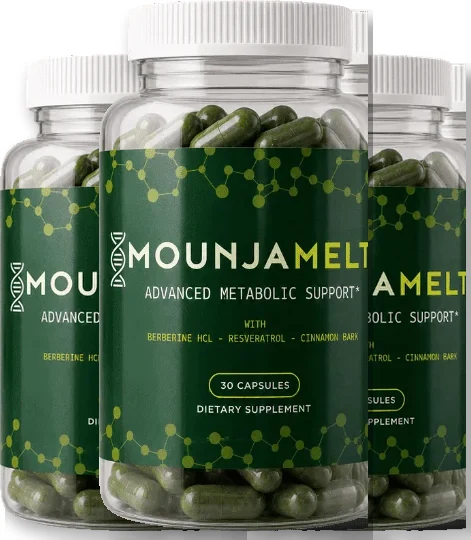
Working out how long to run a metabolic formula?
See how a once-daily capsule is put together, what a realistic trial window looks like, and the current pricing on the official store.
See MounjaMelt PricingHow long each ingredient class needs before you can judge it
A great deal of wasted money in this category comes from judging too early or too late. Different ingredients have genuinely different time courses, and knowing roughly which window applies stops you from abandoning something at week two or clinging to it at month nine.
Fibres declare themselves fastest in one respect and slowest in another. Tolerance shows up within days, so you know quickly whether a fibre suits you. The effect on regularity typically takes one to three weeks at a steady dose, and any broader change takes longer. Four weeks at a consistent amount is a fair test. That window assumes you climbed the dose ladder first — our guide to inulin versus acacia fibre tolerance explains how.
Probiotics are slower and noisier. Most studies run for four to twelve weeks, and effects are strain-specific rather than general. Eight weeks at the dose on the label is a reasonable minimum before concluding anything. Strain-level differences in outcome are the reason a general "probiotic" claim tells you little — Xie et al. Outcome-specific efficacy of different probiotic strains and mixtures in irritable bowel syndrome: a systematic review and network meta-analysis. Nutrients, 2023. Which strain you chose matters as much as how long you take it, as our comparison of vegan versus dairy-derived probiotic strains sets out.
Amino acids such as glutamine are usually assessed over two to eight weeks in the studies that exist, though as our comparison of L-glutamine and collagen for gut support sets out, the evidence in healthy adults is thin enough that a personal trial is doing most of the work. The pooled clinical picture for glutamine and gut permeability is thin in exactly this way: Abbasi et al. A systematic review and meta-analysis of clinical trials on the effects of glutamine supplementation on gut permeability in adults. Amino Acids, 2024.
Botanical and metabolic ingredients generally need the longest runway. Human trials of ingredients such as berberine or green tea extract commonly run for eight to twelve weeks, and effects on body composition, where they occur at all, are gradual. Judging one of these at three weeks is not a test.
The most expensive supplement habit is not the priciest tub. It is the one you keep buying because you never set a date to decide.

Does your body adapt, or stop responding?
A common worry is that continuous use makes a supplement stop working. For this category, the honest answer is that it depends on what you mean.
With fibre, adaptation is real but it is the good kind. Your gut bacterial community shifts over the first few weeks, gas production settles, and a dose that was uncomfortable at the start often becomes unremarkable. That is not the effect wearing off; it is your tolerance improving while the underlying benefit continues.
With probiotics, the picture is different. Most supplemental strains are transient: they pass through rather than settling in permanently. That means the effect generally persists while you keep taking them and fades within one to three weeks once you stop. It does not usually mean tolerance builds, but it does mean nothing is banked. A review of survival and persistence in healthy adults explains why: Morelli et al. A critical evaluation of the factors affecting the survival and persistence of beneficial bacteria in healthy adults. Beneficial Microbes, 2021.
With stimulant-adjacent ingredients such as caffeine-containing extracts, genuine tolerance does develop, which is why some people cycle them. That reasoning does not transfer to fibres and probiotics, even though the same cycling advice gets copied across every category by people writing from templates rather than from evidence.
Build a stop rule before you start
The single most useful habit in this whole category costs nothing. Before you open a new product, write down three things: what specific change you expect, the date you will judge it, and what you will do if nothing has changed.
A worked example: "I expect fewer episodes of bloating after evening meals. I will decide on 15 September. If there is no clear difference, I will stop and not reorder." That is a testable plan. Compare it with the usual approach, which is buying something because it sounds sensible, taking it inconsistently, feeling roughly the same, and reordering anyway because stopping feels like giving up.
Keeping a two-line note each day helps far more than you would expect, because memory reconstructs the past to match what you currently believe. Five words a day for four weeks is enough. If you want a stricter test, add a two-week pause at the end and see whether anything you gained goes away.
This is also the honest answer to anyone hunting for the best gut health daily supplement: there is no single product that wins for everyone, and the only way to find out whether one works for you is to run a short, dated, single-variable trial and be willing to conclude that it did not.
What neither schedule can do
No dosing pattern turns a supplement into a treatment. Dietary supplements do not diagnose, treat, cure or prevent any disease, and taking one for longer does not change that. If you have persistent digestive symptoms, unexplained weight change, blood in the stool, or pain that wakes you at night, no schedule is the right answer and a clinician is.
Neither pattern rescues an inadequate dose. Taking a product with a few hundred milligrams of an ingredient studied at several grams for twelve months instead of three does not accumulate into a studied dose. If the amount is wrong, time will not fix it.
Neither pattern compensates for the fundamentals. Sleep, total fibre from food, protein adequacy, alcohol intake, movement and eating pace all exert far more influence on digestive comfort than any capsule schedule. A supplement is a rounding error on top of those, and it is worth being clear-eyed about which lever you are actually pulling.
And neither pattern makes results permanent. Whatever benefit you get from a fibre or a probiotic is, in almost every case, contingent on continuing. Products that promise a lasting reset from a short course are describing something the evidence does not show.
How this maps onto a weight-loss plan
The same logic applies with more force on the weight side, because the timelines are longer and the temptation to quit early is stronger. Trials of natural metabolic ingredients typically run twelve weeks, and the effects reported are modest and gradual. Someone who buys one bottle, takes it inconsistently for three weeks and concludes it did nothing has not run the experiment.
That is the practical case for buying a longer supply if you decide to try something: not because bulk is cheaper, but because a single bottle rarely covers a fair trial window. It is also the case for deciding your criteria in advance. Write down what you would need to see by week twelve, alongside the diet and activity changes you are making, and accept that the supplement is the smallest of those variables.
Our breakdown of the MounjaMelt formula covers what a once-daily metabolic capsule contains and how long its main ingredients have been studied for. If you are comparing options and wondering where to buy weight loss supplements safely, prefer sellers that publish per-serving amounts in milligrams, state their return window plainly, and do not require a subscription to get the advertised price.
Medical note: this article is general information, not medical advice. Dietary supplements are not intended to diagnose, treat, cure or prevent any disease. Talk to a healthcare professional before starting or continuing any supplement, especially if you are pregnant, nursing, immunocompromised, managing a health condition or taking prescription medication.
Frequently asked questions
How long should I take a gut supplement before deciding if it works?
Four weeks of consistent daily use is the usual minimum for a fair judgement, and eight weeks is fairer still for fibres and probiotics. Anything shorter tells you about tolerance rather than effect. Set the decision date when you open the tub, not when you get impatient.
Do I need to cycle a gut supplement or take breaks?
For fibres and probiotics there is no good evidence that cycling is necessary, and the effects of both fade once you stop rather than persisting. Planned breaks are still useful for a different reason: they show you whether the product was doing anything, because a two week pause makes the difference obvious.
Does a probiotic keep working after I stop taking it?
Usually not for long. Most supplemental strains are transient, meaning they pass through rather than permanently colonising, and studies generally find that measurable effects fade within one to three weeks of stopping. Any benefit is tied to continued use, which is a cost worth factoring in.
Is it safe to take a gut supplement every day indefinitely?
For most healthy adults, fibre and probiotic supplements are well tolerated over long periods, but indefinite use should be a decision rather than a default. Reassess anything you take at least twice a year, and check with a clinician first if you are pregnant, nursing, immunocompromised or taking prescription medication.
Scientific references
- NIH NCCIH — Probiotics: What You Need To Know
- NIH Office of Dietary Supplements — Dietary supplement fact sheets
- Mayo Clinic — Probiotics and prebiotics: what you should know
- Harvard T.H. Chan School of Public Health — The Microbiome
- Morelli L et al. A critical evaluation of the factors affecting the survival and persistence of beneficial bacteria in healthy adults. Benef Microbes, 2021
- Xie P et al. Outcome-specific efficacy of different probiotic strains and mixtures in irritable bowel syndrome: a systematic review and network meta-analysis. Nutrients, 2023
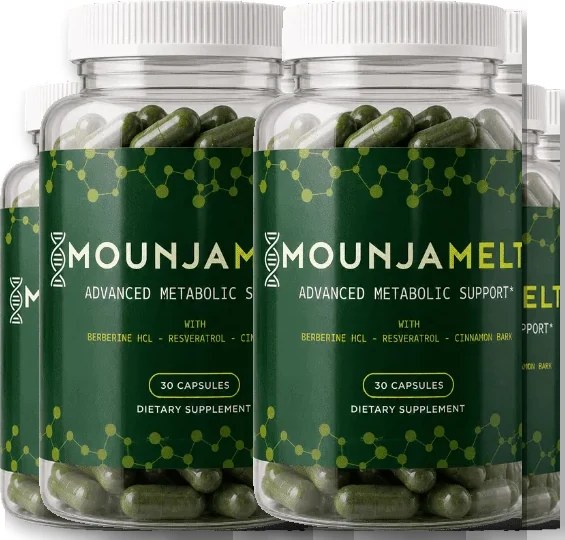
See how MounjaMelt puts this together
Every ingredient, the honest evidence, and today's pricing on the official store.
Check Availability