Vegan vs Dairy-Derived Probiotic Strains: What to Know
Quick Answer: Vegan or Dairy-Derived Probiotic Strains?
Probiotic bacteria are not dairy themselves, but how they are grown and what surrounds them in the capsule often is. Strains are cultured on a growth medium that is frequently milk-based, which can leave trace dairy protein even when a label says dairy-free. A truly vegan probiotic is grown on plant-based media, packed without lactose or milk-protein carriers, and held in a plant capsule rather than gelatin.
- Not the issue: the genus name. Lactobacillus refers to lactic acid, not milk.
- The real issue: growth medium, carrier ingredients and the capsule shell.
- Key caveat: dairy-free and vegan are different claims, and only one of them covers gelatin.
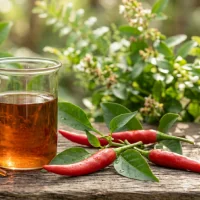
Where probiotic strains actually come from
Start with the misconception that drives most of the confusion. Lactobacillus is named for lactic acid, the compound these bacteria produce when they ferment sugars. It is not named for lactose, and it is not made from milk. A great many strains were originally isolated from dairy products, from fermented vegetables, or from the human digestive tract, but the organism you swallow is a bacterium, not a dairy derivative.
Worth knowing too: the genus was formally reclassified in 2020 and split into more than twenty genera, which is why labels now show names like Lacticaseibacillus rhamnosus or Lactiplantibacillus plantarum where they used to show Lactobacillus. Nothing about the organisms changed. If you see an unfamiliar genus on a newer label, it is taxonomy catching up, not a different bug.
The dairy question enters at the manufacturing stage. To produce commercial quantities, a strain is grown in a fermentation tank on a nutrient medium. Historically the cheapest and most reliable media for lactic acid bacteria were milk-derived: whey, casein hydrolysate, skimmed milk powder. The culture is then concentrated, freeze-dried and blended with carriers before being filled into capsules. Residue from that medium can travel with the powder, which is the actual reason a probiotic can contain trace dairy without listing milk as an ingredient.
What a gut health supplement vegan label actually guarantees
Claims in this category are more specific than they look, and they do not cover the same ground.
Dairy-free generally refers to the deliberately added ingredients in the finished formula. It does not tell you what the strain was grown on, and it says nothing about the capsule shell. A gelatin-capsule probiotic can be honestly labelled dairy-free while being firmly non-vegan.
Lactose-free is narrower still. It addresses one sugar. Milk protein, which is what matters for a milk allergy, is a different substance entirely, and a lactose-free product can still carry casein or whey residue.
Suitable for vegetarians permits dairy by definition. It rules out gelatin, not milk.
Vegan, when stated plainly by the manufacturer or backed by a third-party certification, is the claim that covers the whole chain: plant-based growth medium, no animal-derived carriers or excipients, and a plant capsule. This is why anyone specifically searching for a gut health supplement vegan enough to satisfy their own standard should look for the word vegan itself, or a certification mark, rather than assembling an inference out of dairy-free and vegetarian claims.
One more detail that catches people out: allergen declarations are legally required for deliberately added allergens, and carry-over from a processing aid is handled differently in different jurisdictions. Absence of a milk warning is not proof of absence of milk protein. If that distinction matters medically to you, ask the manufacturer directly.
The two routes, side by side
| Factor | Dairy-derived route | Vegan route |
|---|---|---|
| Growth medium | Whey, casein hydrolysate or milk powder | Plant peptones, vegetable extracts, chickpea or pea protein |
| Possible trace allergen | Milk protein carry-over | None from dairy; check for soy |
| Common carriers | Lactose, milk protein isolate | Maltodextrin, inulin, rice starch, cellulose |
| Capsule shell | Often gelatin | HPMC or pullulan |
| Effect on strain performance | No evidence of an advantage | No evidence of a disadvantage |
| Typical cost | Usually lower | Often slightly higher |
| Label clarity | Medium often unstated | Usually stated, because it is a selling point |
| Evidence strength for the strain itself | Identical — it depends on the strain and dose, not the medium | |
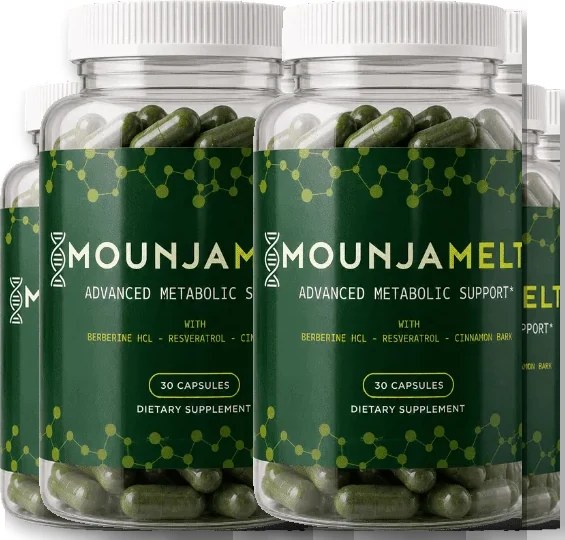
Want a plant-based formula for a different goal?
See how a once-daily botanical capsule is put together, ingredient by ingredient, with the current pricing on the official store.
See MounjaMelt PricingDoes the growth medium change how the strain behaves?
This is the question that should decide your purchase, and the honest answer is that there is no good evidence it matters to you.
What determines whether a probiotic does anything is the identity of the strain down to its strain code, the dose in colony forming units, and whether enough of those organisms are still alive when you swallow them. Benefits in this field are strain specific, not species specific and certainly not genus specific: a result shown for one Lactiplantibacillus plantarum strain does not transfer to another strain of the same species. That is the most useful single fact in the whole category and the one most product pages ignore. A network meta-analysis that ranks individual strains rather than the category makes the point in numbers: Xie et al. Outcome-specific efficacy of different probiotic strains and mixtures in irritable bowel syndrome: a systematic review and network meta-analysis. Nutrients, 2023.
Growth medium does influence manufacturing: yield, cost, and to some extent how robust the freeze-dried culture is. Manufacturers have practical reasons to prefer one medium over another. But there is no body of human research showing that plant-grown strains underperform dairy-grown ones in people, and it would be surprising if there were, because the medium is largely washed away before the culture is dried. For what actually determines whether a strain survives to your gut, see Morelli et al. A critical evaluation of the factors affecting the survival and persistence of beneficial bacteria in healthy adults. Beneficial Microbes, 2021.
Choose on strain code, dose and end-of-shelf-life guarantee. The growth medium is an ethics and allergen question, not a performance one.
One thing genuinely worth checking is how the count is declared. A guarantee of colony forming units at the point of manufacture tells you what the tub contained the day it was filled. A guarantee at expiry tells you what you are actually taking. The second is the more meaningful number and the more expensive one to promise, which is why it appears less often.
Three questions people mix up: allergy, intolerance and ethics
These get treated as one topic and they are not, and the difference changes what you should look for.
Milk allergy is an immune response to milk protein and can be serious. Trace carry-over from a dairy-based growth medium is a legitimate concern here, and it is not always declared. Anyone with a diagnosed milk allergy should treat this as a medical question, choose products that explicitly state freedom from milk protein, and check with their allergy team rather than relying on the front of the box.
Lactose intolerance is a digestive matter, not an immune one, and the threshold is far higher. The amount of lactose that might appear as a carrier in a probiotic capsule is very small, and most people who are lactose intolerant will not notice it. If you are unusually sensitive, avoiding lactose as a listed carrier is easy enough.
Ethical veganism has no threshold at all, which is why it needs the strictest label. It is not satisfied by dairy-free, and it is not satisfied by vegetarian. It requires the full chain, and the parts most often missed are the gelatin capsule shell and minor excipients such as magnesium stearate, which can be plant or animal derived. Some multi-ingredient formulas also carry vitamin D3 from lanolin, a sheep wool derivative, which is why plainly declared plant sourcing matters.
The parts of the label people forget
Once you know the growth medium is not the whole story, a short checklist covers almost everything else.
Check the capsule shell first, because it is the most common failure point: HPMC and pullulan are plant derived, gelatin is not. Check the carriers, which are the bulking agents that make up most of the powder by weight, and are where lactose hides if it is present. Check the excipients, particularly magnesium stearate and stearic acid, which can come from either source. Check for a strain code after each organism, because a name without a code is not a specific product and cannot be matched to any published research. Check the count and how it is guaranteed. And check storage, because some strains need refrigeration and a tub that spent a week in a hot delivery van is a different product from the one that was tested. Powders have their own version of this problem, covered in inulin versus acacia fibre tolerance.
People searching for the best gut health probiotic supplement often compare on the front-of-pack number of billions, which is the least informative figure available. Ten billion of a strain with published human research behind it at that dose is a better purchase than a hundred billion of a blend that lists species without codes. A practical guide to matching a named strain to its published evidence is Sniffen et al. Choosing an appropriate probiotic product for your patient: an evidence-based practical guide. PLOS ONE, 2018.
What none of this can do
Being vegan does not make a supplement effective, and this is where the category oversells hardest. A plant-grown strain with no published human research behind it is still a strain with no published human research behind it. The ethics of the manufacturing route and the evidence for the product are entirely separate questions, and a certification mark answers only the first. The same separation applies to the other gut-support tubs, which we weigh in L-glutamine versus collagen for gut support.
Probiotics do not treat, cure, prevent or reverse any disease, and no dietary supplement may claim to. The clinical evidence in this field is genuinely mixed: it is reasonably supportive for a few specific strains in a few specific situations, and thin for general use in healthy adults who simply want to feel better. That is not a reason to avoid them, but it is a reason to hold expectations loosely and to set a date to decide, as we set out in our piece on daily maintenance versus short-course use.
A probiotic also cannot substitute for the diet. Fermented foods, a wide range of plants and adequate fibre feed a far broader bacterial community than any capsule, and they are cheaper. And it will not do anything for weight: despite persistent marketing, the evidence that a probiotic meaningfully changes body weight in humans is weak and inconsistent, and any honest summary has to say so.
Where this fits alongside a weight-loss formula
Plenty of people take a probiotic and a weight-support formula at the same time, which is fine, but it helps to be clear about which one is supposed to be doing what. A probiotic is not an appetite tool and is not a metabolic tool. If your goal is weight, the ingredients with better evidence sit elsewhere: viscous fibres for satiety, and botanical ingredients such as berberine and cinnamon bark for metabolic support, with the honest caveat that their effects are modest.
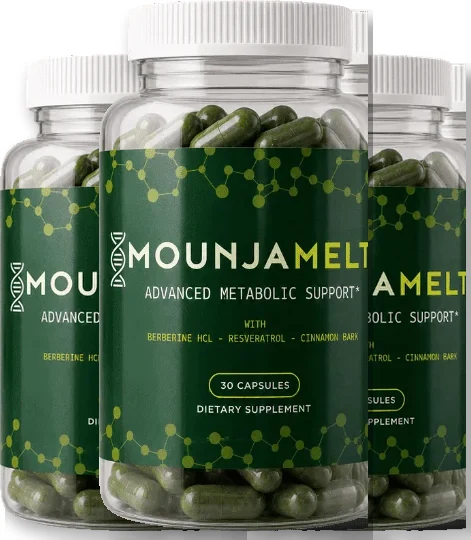
If you follow a plant-based diet, the same label discipline applies to whichever metabolic product you choose. Check the capsule shell, check for animal-derived excipients, and check that per-serving amounts are given in milligrams rather than buried inside a proprietary blend. Our breakdown of the MounjaMelt formula goes through a once-daily botanical capsule on exactly those terms.
A last practical note for anyone comparing options or wondering where to buy weight loss supplements safely: buy from a seller that publishes the full label before checkout, states a clear return window, and does not force a subscription to reach the advertised price. Those three things filter out most of the bad actors in this market faster than any ingredient debate will.
Medical note: this article is general information, not medical advice. Dietary supplements are not intended to diagnose, treat, cure or prevent any disease. Speak to a healthcare professional before starting a probiotic, particularly if you are immunocompromised, seriously unwell, pregnant, nursing or taking prescription medication. Anyone with a diagnosed food allergy should confirm ingredient sourcing with the manufacturer.
Frequently asked questions
Are Lactobacillus strains made from dairy?
No. The name comes from lactic acid, which these bacteria produce, not from milk. Many strains were first isolated from dairy or from the human gut, but the bacteria themselves contain no dairy. What matters for a vegan buyer is the medium the strain was grown on and what else went into the capsule, not the genus name.
Does dairy-free on the label mean the product is vegan?
Not necessarily. Dairy-free usually refers to the finished formula and does not tell you about the growth medium, the capsule shell or minor excipients. A gelatin capsule is dairy-free but not vegan. Look for an explicit vegan statement or a third-party vegan certification rather than inferring it.
Do vegan-grown probiotic strains work as well as dairy-grown ones?
There is no good evidence that the growth medium changes how well a strain performs in people. Probiotic effects are strain specific and depend on the identity of the strain, the dose in colony forming units and whether it survives to the end of shelf life. Judge those three things rather than the medium.
Can someone with a milk allergy take a dairy-grown probiotic?
That is a question for an allergy clinician, not a label. Trace milk protein can carry over from a dairy-based growth medium, and residues are not always declared. Anyone with a diagnosed milk allergy should choose a product that explicitly states it is free from milk protein and confirm with their own healthcare team.
How can I tell if a probiotic is truly vegan?
Check that the strains are grown on plant-based media, that no lactose or milk-protein carriers are used, and that the capsule is plant-based rather than gelatin.
Scientific references
- NIH NCCIH — Probiotics: What You Need To Know
- NIH Office of Dietary Supplements — Probiotics fact sheet for health professionals
- Harvard T.H. Chan School of Public Health — The Microbiome
- Mayo Clinic — Probiotics and prebiotics: what you should know
- Xie P et al. Outcome-specific efficacy of different probiotic strains and mixtures in irritable bowel syndrome: a systematic review and network meta-analysis. Nutrients, 2023
- Sniffen JC et al. Choosing an appropriate probiotic product for your patient: an evidence-based practical guide. PLoS One, 2018
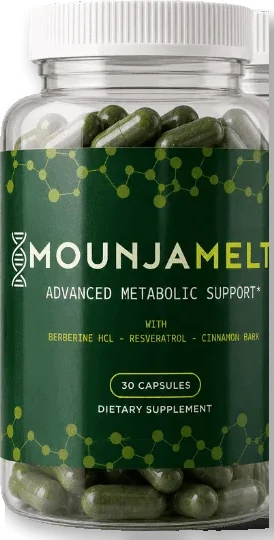
See how MounjaMelt puts this together
Every ingredient, the honest evidence, and today's pricing on the official store.
Check Availability