Inulin vs Acacia Fiber: Which Is Gentler on a Sensitive Gut?
Quick Answer: Which Fibre Is Gentler, Inulin or Acacia?
Acacia fiber is usually the gentler of the two for a sensitive gut. Both are prebiotic fibers that feed gut bacteria, but inulin ferments quickly near the start of the colon and can bring a burst of gas, while acacia gum ferments slowly and spreads that out over many more hours. Inulin has the longer research record as a prebiotic, and acacia is the one many people stay on because it feels more comfortable.
- Gentler on gas and bloating: acacia gum, thanks to slow, distal fermentation.
- Stronger prebiotic record: inulin, with far more published human work behind it.
- Key caveat: the dose ladder matters more than the choice — start at 2 g to 3 g daily, not a full scoop.

What inulin actually is, and why it makes gas
Inulin is a fructan, which means a chain of fructose units with a glucose cap on the end. It is stored as an energy reserve by a long list of plants, and the commercial supply comes overwhelmingly from chicory root, with Jerusalem artichoke and agave as smaller sources. You also eat it without noticing in onions, garlic, leeks, asparagus and wheat.
Human digestive enzymes cannot break the bonds in a fructan chain, so inulin arrives in the colon intact. There it meets bacteria that can break it down, and they do so enthusiastically. That fermentation is the point: it produces short-chain fatty acids, particularly butyrate, which colon cells use as fuel, and it tends to increase the share of bifidobacteria in the community. Inulin is one of the few ingredients that genuinely earns the word prebiotic in its technical sense.
The problem is the pace. Chain length in inulin varies, and the short chains, often sold separately as fructo-oligosaccharides, are fermented within hours of arriving. The gas produced by that fermentation is generated in one region over a short window, and there is nowhere for it to go except through you. This is why someone who adds a full 5 g scoop of chicory inulin to their morning coffee on day one so often reports an afternoon of audible regret. It is not an allergy and it is not damage; it is a fast fermentation curve meeting a gut that was not given time to adapt. Dose-ranging tolerance work in healthy adults maps that curve: Bonnema et al. Gastrointestinal tolerance of chicory inulin products. Journal of the American Dietetic Association, 2010.
Fructans are also on the high-FODMAP list, so people managing irritable bowel symptoms with a low-FODMAP approach are usually advised to avoid concentrated inulin altogether, at least during the elimination phase. For the elimination approach itself, see NIH NIDDK guidance on irritable bowel syndrome.
What acacia fiber is, and why it behaves so differently
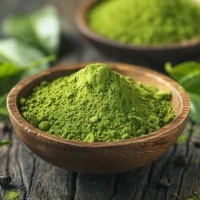
Acacia fiber, also sold as acacia gum, gum arabic or senegal gum, is the dried sap of the Acacia senegal and Acacia seyal trees. It has been used as a food thickener and emulsifier for a very long time, which is part of why its safety record is unusually well characterised for a supplement ingredient.
Chemically it is a complex, highly branched arabinogalactan polysaccharide with a protein fraction attached. That branching is the reason it behaves the way it does. Gut bacteria find it harder work than a simple fructan chain, so fermentation proceeds slowly and continues much further down the colon. Slow, distal fermentation means gas is released gradually rather than in a burst, and the total volume produced over a day is spread thin enough that most people never notice it.
Acacia also dissolves into water without any viscosity, which is unusual for a soluble fibre. It leaves no gel, no grit and essentially no taste, so it disappears into coffee, water or a smoothie. Psyllium, by contrast, thickens within a minute and has to be drunk quickly. For anyone who abandoned fibre supplements because of texture, that difference alone can decide the matter.
Inulin, acacia and the rest of the fibre shelf
| Fibre | Typical daily amount | Fermentation speed | Gas potential | Evidence strength |
|---|---|---|---|---|
| Chicory inulin | 3 g to 10 g | Fast, proximal colon | High | Strong prebiotic record |
| Acacia gum | 5 g to 15 g | Slow, distal colon | Low | Moderate, good tolerance data |
| Partially hydrolysed guar gum | 5 g to 10 g | Slow | Low | Moderate |
| Psyllium husk | 5 g to 10 g | Poorly fermented | Low to moderate | Strong for stool regularity |
| Glucomannan | 1 g to 3 g | Slow, forms a gel | Moderate | Best evidence sits with satiety |
| Resistant starch | 5 g to 20 g | Moderate | Moderate to high | Growing but mixed |
Choosing a gut health supplement powder when your gut is sensitive
If you already know your digestion is easily upset, work backwards from tolerance rather than forwards from marketing. The most effective fibre is the one you are still taking in three months, and adherence is decided almost entirely by comfort in the first fortnight. If appetite rather than regularity is what you are after, glucomannan fibre for appetite and fullness is the better-matched ingredient.
For a genuinely sensitive gut, acacia is the sensible first attempt. It is low-FODMAP at ordinary intakes, it has no texture, and its slow fermentation gives your bacterial community time to adjust rather than presenting it with a feast. If acacia goes well for a month, you have proved the concept and can decide whether to add a small amount of inulin on top for its stronger prebiotic effect. If acacia does not go well, adding inulin will not help.
People shopping for a gut health supplement powder often assume the multi-fibre blend is the safest choice because it hedges. In a sensitive gut it is usually the worst choice, because when something goes wrong you have no way of knowing which of the five fibres caused it. Single-ingredient tubs are cheaper, more informative and easier to titrate.
The fibre that works is not the one with the best label. It is the one you can take at a useful dose without wanting to stop.

Shopping the weight aisle rather than the fibre aisle?
See how a once-daily capsule formula is built, ingredient by ingredient, with the current pricing on the official store.
See MounjaMelt PricingThe dose ladder that prevents a bad week
Almost every negative experience with a fibre powder comes down to starting too high, too fast. The label suggests a full scoop because a full scoop is the amount studied, but studies usually include a run-in period and this is the part nobody reads.
A conservative ladder looks like this. Week one: 2 g to 3 g daily, roughly half a teaspoon, taken with a full glass of water at the same time each day. Week two: if week one was uncomfortable, hold; if it was fine, move to 5 g. Week three: hold or move to 7 g. Week four onward: continue in 2 g steps until you reach the amount on the tub, or until you reach the amount that gives you what you wanted, whichever comes first. There is no prize for reaching the label dose.
Two practical notes. Fluid matters: fibre without adequate water can make constipation worse rather than better, and this is the most common self-inflicted problem in the category. And timing matters less than people think, with one exception: soluble fibres can slow the absorption of some medications, so separate any prescription by at least two hours and ask a pharmacist if you take something with a narrow therapeutic window.
What the evidence supports, and where it thins out
Inulin has the deeper literature. Controlled human studies consistently show that supplemental inulin shifts the gut bacterial community, typically increasing bifidobacteria, and increases short-chain fatty acid production. That is a genuine, repeatable finding. Where the evidence gets thinner is the next step: whether that measured shift reliably translates into how you feel, how regular you are, or any downstream health outcome in an otherwise healthy adult. Some studies report improvements in stool regularity and comfort; others find the microbial change without a matching symptomatic change. A controlled tolerance and utilisation study in healthy adults shows the same split — Holscher et al. Gastrointestinal tolerance and utilization of agave inulin by healthy adults. Food & Function, 2014.
Acacia gum has less published work overall, and much of what exists focuses on tolerance rather than outcomes. The tolerance data is genuinely useful, because it is the question people actually have. There is a smaller set of studies looking at bacterial shifts and stool consistency, generally positive but modest.
For both, the broader and better-established finding is the boring one: adequate total dietary fibre is associated with better digestive and cardiometabolic health, most adults fall well short of the recommended intake, and closing that gap is worthwhile. Whether you close it with chicory root, acacia sap or an extra bowl of beans matters much less than closing it at all. If you are searching for the best prebiotic supplement for gut health, the honest answer is that the best one is the one that gets your weekly fibre total up.
What a fibre powder cannot do
A fibre supplement does not treat, cure, prevent or reverse any disease, and any product page that suggests otherwise is telling you something it is not allowed to tell you. Persistent symptoms deserve a diagnosis, not a scoop. Blood in the stool, unexplained weight change, night pain, fever or a sudden change in bowel habit that lasts more than a couple of weeks all warrant a clinician rather than a tub.
A single isolated fibre also cannot replicate whole foods. Your gut bacteria are a large, varied community, and different members ferment different substrates. One purified fibre feeds a narrow slice of that community. Thirty different plants across a week feeds a much wider one, and brings polyphenols, vitamins and minerals along with it. A powder is a patch, not a diet.
Nor will either fibre fix a gut that is being upset by something else entirely: too little sleep, a rushed eating pattern, high alcohol intake, a medication side effect or a rapid change in eating habits. Fibre added on top of an unaddressed cause usually just adds a second variable.
Finally, neither ingredient works quickly. Bacterial communities adapt over weeks. Judging a fibre after three days tells you about your tolerance, not about its effect.
Fibre, appetite and a weight-loss push
Fibre gets pulled into weight-loss conversations for a legitimate reason: soluble, viscous fibres slow gastric emptying and can genuinely blunt appetite. That effect is strongest for gel-forming fibres such as glucomannan and psyllium, moderate for guar gum, and weakest for inulin and acacia, which do not form a meaningful gel at ordinary doses. So if satiety is what you actually want, neither of the two fibres in this comparison is the obvious pick.
The other thing worth flagging is a trap: people cut calories, digestion changes, they blame their gut and buy a fibre powder, then add a large dose of a fast-fermenting fibre on top of a diet that has just changed a great deal. Two variables move at once and nothing can be attributed. Change one thing at a time.
If the underlying goal is metabolic support rather than digestive comfort, a different shelf applies. Our walk-through of the MounjaMelt formula covers what a once-daily capsule blend contains and what the research does and does not support, and our comparison of L-glutamine and collagen for gut support deals with the amino-acid end of the same aisle. Readers looking into where to buy weight loss supplements safely should also check that whatever they choose lists its amounts per serving in plain milligrams rather than hiding them inside a proprietary blend. The same labelling standard decides a probiotic purchase, as our piece on vegan versus dairy-derived probiotic strains explains.
Medical note: this article is general information, not medical advice. Dietary supplements are not intended to diagnose, treat, cure or prevent any disease. Speak to a healthcare professional before adding a fibre supplement, particularly if you have a diagnosed digestive condition, a history of bowel obstruction, or take prescription medication.
Frequently asked questions
Which is gentler on a sensitive gut, inulin or acacia fiber?
Acacia fiber is generally gentler. It ferments slowly and further along the colon, so it produces gas more gradually than inulin, which ferments quickly and near the start of the colon. People who get bloated on chicory root inulin often tolerate acacia gum at the same daily amount.
How much fiber powder should I start with?
Start far lower than the label suggests. Two to three grams a day for the first week is enough for most people, taken with a full glass of water. Increase by roughly two grams a week only if the previous amount was comfortable. Rushing the ladder is the single most common reason a fibre powder gets abandoned.
Does inulin count as a prebiotic and acacia not?
Both count. A prebiotic is a food component your own enzymes cannot digest that your gut bacteria ferment, and inulin and acacia gum both qualify. Inulin has the longer research record and a narrower, faster fermentation profile. Acacia gum is fermented more slowly across a wider stretch of the colon.
Can a fiber powder replace eating vegetables and whole grains?
No. A single isolated fibre feeds a narrower slice of your gut bacteria than the mixture of fibres in whole foods, and it carries none of the vitamins, minerals or polyphenols that come with plants. Use a powder to close a gap on the days food falls short, not as a substitute for the food.
Which fiber causes less gas, inulin or acacia?
Acacia gum usually causes less gas because it ferments slowly and further along the colon. Inulin ferments faster near the start, which can produce a quicker burst of gas.
Scientific references
- Mayo Clinic — Dietary fiber: essential for a healthy diet
- Harvard T.H. Chan School of Public Health — Fiber
- Bonnema AL et al. Gastrointestinal tolerance of chicory inulin products. J Am Diet Assoc, 2010
- Holscher HD et al. Gastrointestinal tolerance and utilization of agave inulin by healthy adults. Food Funct, 2014
- NIH NIDDK — Irritable Bowel Syndrome
- NIH NCCIH — Probiotics: What You Need To Know
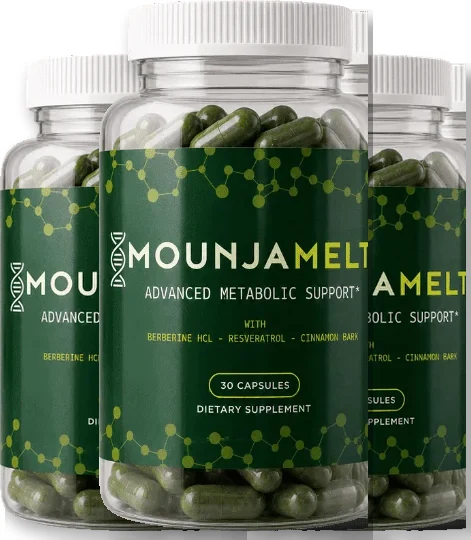
See how MounjaMelt puts this together
Every ingredient, the honest evidence, and today's pricing on the official store.
Check Availability