Best Weight Loss Pills 2026: What Actually Works
Quick Answer: Which Are the Best Weight Loss Pills in 2026?
The honest answer is that no over-the-counter pill rivals a prescription. Among natural options, the best weight loss pills combine satiety fibre, green-tea catechins and berberine at studied doses, and you should expect modest results alongside a calorie deficit. MounjaMelt brings the berberine and green-tea half of that list into one daily capsule, without a satiety fibre and without published milligram amounts.
- Best evidence: satiety fibre (glucomannan) plus green-tea catechins.
- Realistic result: about 5 to 10 pounds over eight weeks, diet permitting.
- Non-negotiable: a full label at clinically used doses, no hidden blends.
If you have typed "best weight loss pills" into a search bar this year, you have joined roughly a hundred thousand people a month doing exactly the same thing — and landing in one of the noisiest corners of the internet. Every result claims to be number one, half of them are thinly disguised adverts, and almost none of them tell you the uncomfortable truth up front. So here it is: over-the-counter weight loss pills are real, some of their ingredients genuinely help, and the effect is modest. This guide ranks what works by evidence rather than hype, then explains where MounjaMelt lands in that picture.
We are an affiliate publisher, and MounjaMelt is a product we cover, so read this with the healthy scepticism you would apply to anyone with something to sell. Our promise is simpler than a five-star rave: we will show you what the human research actually supports, what it does not, and how to shop so you are not paying premium money for pixie dust.
What "best weight loss pills" actually means in 2026
The phrase covers three very different things that get blurred together. First, prescription medications — the GLP-1 drugs such as semaglutide and tirzepatide — which produce large, clinically dramatic weight loss and require a doctor. Second, a single approved OTC drug, orlistat, which blocks some dietary fat and carries famously unpleasant digestive side effects. Third, and by far the largest category, dietary supplements: capsules built from fibres, botanicals and minerals that support weight management rather than acting as drugs.
This guide is about that third group, because that is what almost everyone searching for the best weight loss pills is actually looking at and can actually buy without a prescription. The key mental adjustment is this: a good supplement is a tailwind, not an engine. It can make a sensible plan a little easier and a little faster. It cannot substitute for the plan. Any page that tells you otherwise has stopped reporting and started selling.
How we ranked the best weight loss pills: evidence, not marketing
Ranking supplements is different from ranking gadgets, because most finished products have never been trialled as a whole. What has been studied is the individual ingredients. So our approach is to score by the strength of human evidence behind each active, the honesty of the dosing, and how well the product matches the amounts that studies actually used. On that basis, five ingredients keep earning their place in the better formulas. Where a row below says "modest", that grade comes from pooled human data rather than a single trial — Xiong et al. The effect of berberine supplementation on obesity indices: a dose-response meta-analysis and systematic review of randomized controlled trials. Complementary Therapies in Clinical Practice, 2020 for berberine, and Zalewski et al. The effect of glucomannan on body weight in overweight or obese children and adults: a systematic review of randomized controlled trials. Nutrition, 2015 for glucomannan.
The five actives worth paying for
| Ingredient | What it does | Evidence strength |
|---|---|---|
| Glucomannan | Soluble fibre that expands in the stomach to promote fullness and blunt appetite | Strongest — accepted for weight reduction with a calorie-restricted diet |
| Green tea catechins (EGCG) | Small increase in energy expenditure and fat oxidation, best with caffeine and movement | Moderate |
| Berberine | Activates the AMPK energy pathway; modest effect on weight and metabolic markers | Moderate but over-hyped as "natural Ozempic" |
| Chromium | Supports normal glucose metabolism; may steady appetite in some people | Weak for weight specifically |
| Cayenne (capsaicin) | Minor thermogenic nudge and appetite blunting | Modest supporting role |
Notice what the right-hand column keeps saying: modest, moderate, weak. That is not us being negative — it is the actual state of the science, and any brand pretending its five-ingredient capsule behaves like a prescription injection is misleading you. The reason these five still make the shortlist is that, taken together and taken consistently, they nudge the same levers a good diet already pulls: fullness, blood-sugar steadiness and a slightly higher metabolic burn. For a deeper look at the most hyped of them, our review of the human evidence behind berberine as a natural GLP-1 alternative is worth a read before you buy anything that leans on it.
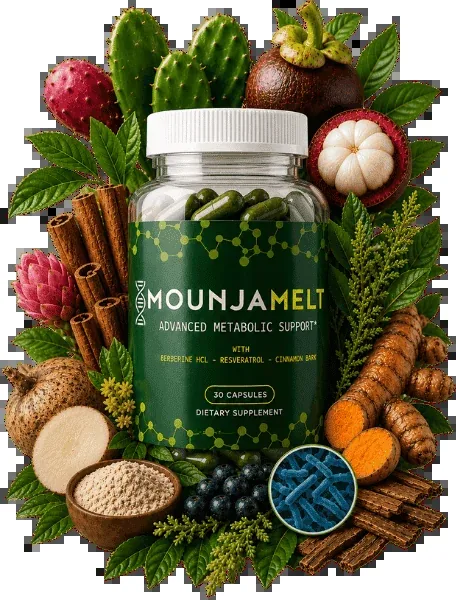
MounjaMelt covers part of that shortlist rather than all of it. Its seven named ingredients are berberine HCl, cinnamon bark extract, resveratrol, gymnema sylvestre, chromium, L-carnitine and green tea extract, so it brings berberine, green-tea catechins and chromium to the table but no satiety fibre and no capsaicin. It names every ingredient on the label instead of hiding them inside a "proprietary blend," and asks for one capsule a day rather than a fistful — but it stops short of publishing the milligram amounts, so you cannot line it up against the trial doses in the table above.
See the full five-ingredient label and today's price
Every active, the dose it is used at, and the current bundle pricing on the official store — no proprietary-blend guessing.
See MounjaMelt PricingHow much weight can the best weight loss pills realistically shift?
Here is the number the sales pages bury: across the better reviews of these ingredients, people lose in the region of 5 to 10 pounds over about eight weeks — and only when the supplement sits on top of a modest calorie deficit. That is a genuine, worthwhile head start for a lot of people. It is also nothing like the "melt 30 pounds by summer" language that gets slapped on the same ingredients elsewhere. The green-tea half of that shortlist rests on Hursel et al. The effects of catechin rich teas and caffeine on energy expenditure and fat oxidation: a meta-analysis. Obesity Reviews, 2011.
Two things make the difference between the low end and the high end of that range. The first is the diet underneath it; the pill amplifies a deficit, it does not create one. The second is consistency: these ingredients work on a build-up timescale of weeks, not the overnight jolt people expect from a stimulant. Someone who takes a capsule sporadically for two weeks and concludes it does nothing has not actually run the experiment.
Where OTC pills stop and prescription GLP-1 drugs begin
It would be dishonest to write a 2026 weight-loss-pill guide without addressing the elephant in the room. Prescription GLP-1 medications changed the conversation, producing average losses that no supplement comes close to. If you qualify for one and can access it, that is a medical decision to have with a clinician, and no capsule on this page competes with it on raw potency. In the pivotal 68-week trial, once-weekly semaglutide produced a mean body-weight change of about −14.9% against −2.4% on placebo: Wilding et al. Once-weekly semaglutide in adults with overweight or obesity. New England Journal of Medicine, 2021.
What OTC pills offer instead is access, cost and simplicity. They need no prescription, they cost a fraction of an injectable, and they carry a milder side-effect profile. For people who do not qualify for a GLP-1, do not want one, or are working on the everyday task of eating a little less and moving a little more, a transparent natural formula is a sensible tool. The mistake is expecting it to do a drug's job. If a GLP-1 comparison is specifically what brought you here, weigh the trade-offs carefully before deciding a supplement is the right substitute for you.
Three myths worth clearing up before you buy
Myth one: "the best weight loss pill works even if you eat whatever you want." No credible ingredient overrides an energy surplus. Every study showing a benefit was run alongside dietary change. A pill that promised results without it would be claiming something the evidence simply does not show.
Myth two: "more ingredients means a better pill." A label crammed with twenty exotic-sounding extracts, each at a fairy-dust dose, is worse than five actives at amounts that resemble the studies. Long ingredient lists are usually a marketing tactic, not a sign of strength. Judge a formula by the doses you can actually see, which is exactly why proprietary blends that hide the numbers deserve suspicion.
Myth three: "natural means you can ignore the dose and the safety notes." Natural ingredients still interact with medication and still have ceilings. High-dose green tea extract, for instance, has been linked in rare cases to liver problems, which is precisely why sensible dosing matters. Read the label, respect it, and talk to a professional if you take other medicines.
How to run a fair test of any weight loss pill
The most common way people waste money in this category is not buying the wrong pill — it is testing the right one badly. Because these ingredients build over weeks, a proper trial has to be set up deliberately rather than judged on a whim. Before you open a new bottle, write down three things: the specific change you expect to see, the date you will judge it, and what you will do if nothing has changed. That single habit turns a vague hope into a testable plan and stops you from either quitting at week two or clinging on at month six out of sunk-cost stubbornness.
Give the test an honest length. Eight weeks is a sensible minimum and twelve is fairer, because that is the window most human trials of these ingredients actually use. Keep the diet variable steady across that window, too — if you overhaul your eating and start a supplement on the same day, you will never know which lever did the work. And track something simple: a weekly weigh-in at the same time of day, or a note on how manageable your appetite feels. Memory quietly rewrites the past to match what you already believe, so a five-word daily note is worth more than a month of impressions.
This is also the practical case for choosing a longer supply if you decide to commit. It is not that bulk is virtuous; it is that a single bottle rarely covers a fair trial window, so a one-bottle test often ends before the formula has had a chance to show what it does. Buy enough to run the experiment properly, then let the result — not the marketing and not your mood — decide whether you reorder.
Related reading
Medical note: this article is general information, not medical advice. Dietary supplements are not intended to diagnose, treat, cure or prevent any disease. Talk to a healthcare professional before starting any supplement, especially if you are pregnant, nursing, managing a health condition or taking prescription medication.
Frequently asked questions
What is the best over-the-counter weight loss pill in 2026?
There is no single best OTC pill for everyone. The strongest evidence sits with satiety fibres like glucomannan and, more modestly, green-tea catechins and berberine. A good pick lists every ingredient at a studied dose. MounjaMelt covers the berberine and green-tea side of that list in one daily capsule, though it names its ingredients without publishing their milligram amounts.
Do weight loss pills actually work without dieting?
Not really. In reviews, OTC pills produce roughly 5 to 10 pounds over about eight weeks, and only alongside a calorie deficit. No supplement overrides eating more than you burn. Treat any pill as a small tailwind on top of diet and movement, never a replacement for them.
How much weight can you lose with a natural weight loss supplement?
Realistic expectations matter. Human reviews of the ingredients in natural formulas show modest losses, often in the 5 to 10 pound range over two months, and results depend heavily on diet, activity and consistency. Anyone promising 30 pounds in a month is selling hype, not evidence.
Is MounjaMelt a good weight loss pill?
MounjaMelt is a reasonable option in its class. It names all seven of its ingredients rather than hiding them in a proprietary blend, and is taken as one capsule a day. It does not publish per-capsule milligram amounts, which is a real limitation, and it is not a GLP-1 drug and will not match one.
Scientific references
- NIH Office of Dietary Supplements — Dietary Supplements for Weight Loss
- NIH NCCIH — Green Tea: What You Need To Know
- EFSA — Scientific Opinion on glucomannan and reduction of body weight
- Xiong P et al. The effect of berberine supplementation on obesity indices: a dose-response meta-analysis and systematic review of randomized controlled trials. Complement Ther Clin Pract, 2020
- Hursel R et al. The effects of catechin rich teas and caffeine on energy expenditure and fat oxidation: a meta-analysis. Obes Rev, 2011
- Zalewski BM et al. The effect of glucomannan on body weight in overweight or obese children and adults: a systematic review of randomized controlled trials. Nutrition, 2015
- FTC — Health Products Compliance Guidance (weight-loss claims)
Ready to try the once-daily formula?
See every ingredient, the honest evidence, and today's bundle pricing on the official store.
Check MounjaMelt Availability