Natural Alternative to Mounjaro and GLP-1 Drugs
Is There a Natural Alternative to Mounjaro That Actually Helps?
A natural alternative to Mounjaro can support the same goals from a gentler angle, though no supplement equals the drug. Botanicals like berberine, green tea, cinnamon and ginger may lightly influence GLP-1 and blood-sugar pathways. They act slower and more modestly than injectables and work alongside diet changes, so treat them as support.
- Closest botanical: berberine, for its metabolic and blood-sugar signalling.
- Honest limit: no over-the-counter option matches semaglutide or tirzepatide potency.
- Best use: a combined appetite, metabolism and fibre approach paired with diet.
If you are searching for a natural alternative to Mounjaro, you are probably weighing cost, needles, prescriptions or side effects against the appeal of doing it without a drug. That is a completely reasonable place to start, and this guide is written to give you the honest version rather than the hopeful one. There is real science behind several natural options that nudge the same appetite and metabolic pathways GLP-1 medicines target, and there are hard limits on how far any of them can go. You deserve both halves of that picture before you spend a penny.
So let us set the frame first, then work through the botanicals worth knowing, where they genuinely help, and where the marketing quietly oversells them.
What Mounjaro and GLP-1 drugs actually do
Mounjaro (tirzepatide) and drugs like Ozempic and Wegovy (semaglutide) work by mimicking gut hormones, chiefly GLP-1, that your body releases after eating. These hormones slow how fast the stomach empties, signal fullness to the brain and improve blood-sugar control. Tirzepatide adds a second target, GIP, which is part of why it is so potent. The net effect for many users is a strong, sustained reduction in appetite that makes a calorie deficit far easier to hold, and the weight results in trials are large. The pivotal 68-week semaglutide trial recorded a mean body-weight change of about −14.9% versus −2.4% on placebo — Wilding et al. Once-weekly semaglutide in adults with overweight or obesity. New England Journal of Medicine, 2021.
That potency is the thing to hold in mind, because it sets a ceiling no supplement reaches. When we talk about a natural alternative, we are not talking about a botanical that does the same thing more quietly. We are talking about ingredients that touch some of the same levers, appetite, blood sugar, metabolism, from a much gentler starting point. Confusing the two is how people end up disappointed. We put the two numbers next to each other in our head-to-head on berberine versus GLP-1 medications.
The natural ingredients that support GLP-1 pathways
Several well-studied botanicals genuinely interact with the biology GLP-1 drugs exploit, even if they do not come close to matching them.
Berberine is the standout. It influences an enzyme called AMPK that sits at the centre of how cells manage energy, and it has a solid research record for supporting healthy blood sugar. Some early work suggests it may modestly encourage the body's own GLP-1 signalling. It is the reason berberine has picked up the nickname "nature's helper" in this conversation, and it is worth reading our detailed look at the berberine and natural GLP-1 weight-loss evidence to see exactly what the trials found and where they stop. The pooled berberine figure is in Xiong et al. The effect of berberine supplementation on obesity indices: a dose-response meta-analysis and systematic review of randomized controlled trials. Complementary Therapies in Clinical Practice, 2020.
Green tea catechins support a small increase in energy expenditure and fat oxidation, especially with the leaf's natural caffeine. Cinnamon has modest evidence for smoothing post-meal blood-sugar spikes, which can indirectly steady appetite. Ginger influences digestion and has some data on satiety and post-meal glucose. None of these is a heavyweight on its own, but the logic of combining them is that they cover several small levers at once rather than leaning on one. Each lever has its own modest pooled estimate: green tea in Hursel et al. The effects of catechin rich teas and caffeine on energy expenditure and fat oxidation: a meta-analysis. Obesity Reviews, 2011, cinnamon in Mousavi et al. Cinnamon supplementation positively affects obesity: a systematic review and dose-response meta-analysis of randomized controlled trials. Clinical Nutrition, 2020.
How the natural options compare on the levers that matter
| Approach | Main lever | Appetite effect | Speed | Honest ceiling |
|---|---|---|---|---|
| Tirzepatide / semaglutide (Rx) | GLP-1 / GIP hormones | Strong | Fast | High, prescription only |
| Berberine | AMPK, blood sugar | Indirect, modest | Weeks | Gentle metabolic support |
| Glucomannan fibre | Stomach fullness | Direct, modest | Per meal | Curbs portion size |
| Green tea catechins | Energy expenditure | Weak | Cumulative | Small metabolic nudge |
| Cinnamon / ginger | Post-meal glucose | Indirect, weak | Per meal | Supportive only |
Where MounjaMelt fits as a natural approach
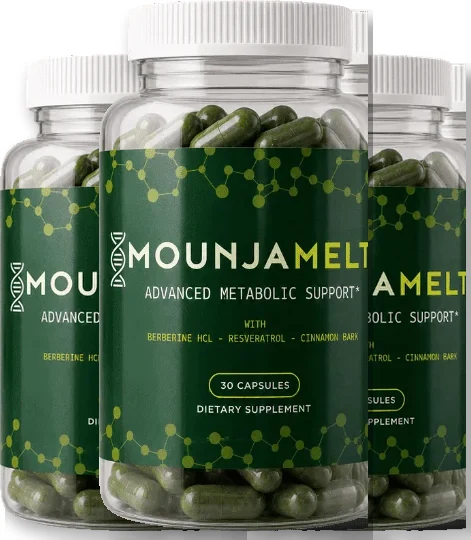
MounjaMelt was built for exactly this brief: a once-daily, non-prescription capsule that combines several of these levers instead of betting on one. It pairs berberine for metabolic and blood-sugar support with green tea catechins for a small energy-expenditure nudge, glucomannan soluble fibre for genuine pre-meal fullness, plus chromium and cayenne for cravings and a mild thermogenic effect. The design philosophy is coverage, not potency, because coverage is the realistic way a botanical formula competes with itself, not with an injectable.
That combination is the honest sweet spot for a natural approach. Berberine alone is metabolic support with no direct appetite handle; glucomannan alone curbs a meal but does nothing for blood sugar between meals; green tea alone is a rounding error. Together they touch appetite, metabolism and glucose from a single daily capsule, which is why a multi-lever formula tends to outperform a single-ingredient tub for people who want a drug-free route.
See the full natural formula in plain milligrams
Berberine, green tea, chromium, cayenne and glucomannan fibre in one daily capsule, with current pricing on the official store.
View MounjaMelt on the Official StoreSetting honest expectations versus an injectable
Here is the part the internet usually skips. A natural alternative to Mounjaro will not reproduce injectable results, and any product implying it does is misleading you. Prescription GLP-1 and dual-agonist medicines produce large, reliable appetite suppression; botanicals produce gentle, variable support. That does not make the natural route pointless, it makes it a different route with a different job.
The right expectation for a well-built natural formula, paired with a modest calorie deficit, is meaningful but moderate progress over weeks, not the rapid drop some people see on medication. If you have realistic goals, are not a medical candidate for the drugs, or simply prefer to start without a prescription, that is a perfectly sensible place to begin. If your situation genuinely calls for pharmaceutical intervention, a supplement is not a substitute for a conversation with a clinician, and you should never stop a prescribed medicine in favour of a capsule on your own.
Natural GLP-1 support is not a smaller version of the drug. It is a different lever, pulled more gently, that still moves in the right direction.
Two objections worth answering honestly
"If it's not as strong, why bother?" Because strength is not the only variable. A gentler tool with a wide safety margin, no prescription and no needle suits a lot of people whose goals are moderate. The best appetite tool is the one you will actually stick with, and for many that is a daily capsule, not an injection. If cravings are your main battle, our guide to a natural appetite suppressant that actually works goes deeper on that specific lever.
"Aren't all these OTC weight-loss products the same hype?" No, and the differences are learnable. A formula that lists its ingredients in plain milligrams, uses actives with real research, and sets honest expectations is a different animal from a proprietary-blend mystery pill. Our guide to over-the-counter weight-loss pills covers how to tell them apart so you are not buying on packaging alone.
Who a natural approach suits best
A natural alternative to Mounjaro is not the right first move for everyone, and being honest about the fit is more useful than pretending it is universal. It suits people with moderate goals, say a stubborn ten or twenty pounds, who want a gentle, drug-free nudge and are prepared to do the dietary work alongside it. It suits people who are not clinical candidates for the prescription medicines, or who cannot access them, or who simply want to try the least aggressive tool first before escalating. And it suits people who value a wide safety margin and the convenience of a daily capsule over maximum potency.
It is a poor fit for someone with a large amount of weight to lose who needs the kind of appetite suppression only a medicine reliably provides, and it is not a fit at all for anyone hoping to avoid changing their diet, because the whole mechanism depends on making a deficit easier to hold rather than creating one. Being clear-eyed about which group you fall into saves both money and disappointment. If you are early in your research and still comparing categories, our roundup of the best weight-loss pills of 2026 and what actually works is a sensible next stop before you commit to any single route.
Are natural GLP-1 alternatives safe?
For most healthy adults, the common botanicals are well tolerated at sensible doses, and the usual complaint is mild and digestive: some bloating from the fibre in the first week, an occasional upset stomach from berberine. That is the ordinary picture, not the whole picture. Berberine can interact with several medications, including some used for blood sugar and blood pressure, and soluble fibre can slow the absorption of oral drugs if taken at the same time. Pregnancy and nursing are firm reasons to wait.
None of that makes these ingredients dangerous, it makes them worth respecting. Take a formula at its labelled dose, separate it from prescriptions by a couple of hours, and clear it with a healthcare professional if you take medication or manage a condition. Done that way, a natural approach is a low-drama way to support your goals.
Medical note: this article is general information, not medical advice. Dietary supplements are not intended to diagnose, treat, cure or prevent any disease and do not replace prescription medication. Do not stop or change a prescribed treatment without your doctor. Speak to a healthcare professional before starting a supplement, especially if you are pregnant, nursing, taking medication or managing a condition such as diabetes.
Frequently asked questions
Is there a natural alternative to Mounjaro?
There is no natural product that matches Mounjaro, but there are natural options that support the same appetite and metabolic goals from a different angle. Botanicals such as berberine, green tea, cinnamon and ginger may gently influence GLP-1 and blood-sugar pathways. They work slower and more modestly than an injectable, and only alongside diet changes, so treat them as support rather than a like-for-like swap.
What supplement works most like a GLP-1 drug?
Berberine is the ingredient most often compared to GLP-1 medicines because of its effects on blood-sugar handling and metabolic signalling, which is why it is sometimes nicknamed nature's helper. It does not replicate injectable potency, but paired with soluble fibre for appetite and green tea for metabolism, as in MounjaMelt, it is the closest botanical approach to the same targets.
Can berberine replace Ozempic or Mounjaro?
No. Berberine cannot replace Ozempic or Mounjaro. Prescription GLP-1 and dual-agonist medicines produce far larger, more reliable appetite and weight effects than any supplement. Berberine may offer gentler metabolic support for people who cannot or choose not to use a prescription, but it is a different tool with a much lower ceiling, and anyone on medication should not stop it in favour of a supplement without a doctor.
Are natural GLP-1 alternatives safe?
For most healthy adults the common botanicals are well tolerated at sensible doses, with mild digestive effects being the usual complaint. Safety is not automatic, though: berberine can interact with several medications, and soluble fibre can slow drug absorption. Anyone pregnant, nursing, taking prescription medicine or managing a health condition should check with a healthcare professional before starting.
Which natural ingredients support GLP-1 pathways?
Berberine, green tea, cinnamon and ginger are the botanicals most often linked to GLP-1 and blood-sugar pathways. They act slowly and modestly, and they work best alongside diet changes.
Scientific references
Related reading
Prefer to start the natural, non-prescription way?
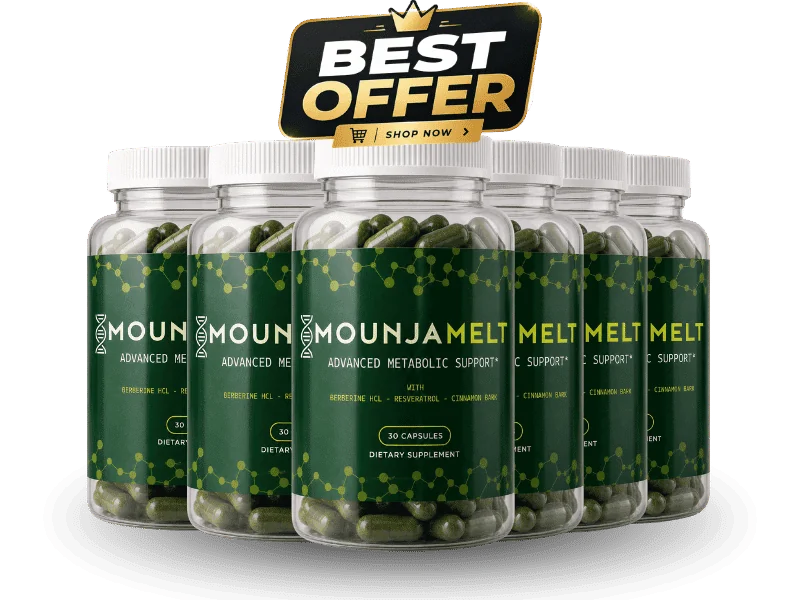
See how MounjaMelt combines berberine, green tea and fibre for appetite and metabolic support, with today's pricing on the official store.
Check MounjaMelt Pricing