Chromium for Weight Loss: Does Chromium Picolinate Curb Sugar Cravings?
Quick Answer: Does Chromium Stop Sugar Cravings?
Chromium for weight loss is a craving-and-blood-sugar helper, not a fat-loss drug. As a trace mineral it helps insulin do its job more efficiently, and steadier blood sugar is linked to fewer sharp cravings for carbs and sweets in some people. The effect on the scale is small on its own; it works by making a lower-sugar diet easier to stick to, not by melting fat. The Cochrane review of chromium picolinate in overweight and obese adults found only a small difference in body weight against placebo — Tian et al. Chromium picolinate supplementation for overweight or obese adults. Cochrane Database of Systematic Reviews, 2013.
- What it does: supports insulin efficiency and steadier blood-sugar handling.
- Real benefit: fewer sharp sugar and carb cravings for some people.
- Key caveat: small scale-weight effect — the diet does the heavy lifting.

If you have ever felt a mid-afternoon crash send you straight to the biscuit tin, you already understand the problem chromium is marketed to solve. Blood-sugar swings drive cravings, cravings drive snacking, and snacking undoes an otherwise sensible day of eating. Chromium is one of the few mineral ingredients with a plausible, mechanism-based reason to help with that loop. The honest question is not whether it does anything, but how much.
What chromium actually is and why cravings respond to it
Chromium is an essential trace mineral, meaning your body needs a tiny amount of it and gets that amount from food such as broccoli, whole grains and meat. Its recognised role is in carbohydrate and fat metabolism, where it appears to enhance the action of insulin — the hormone that ushers glucose out of your bloodstream and into cells. When insulin works efficiently, blood sugar rises and falls in gentle waves rather than sharp spikes and crashes.
That matters for cravings because the crash is the culprit. After a big hit of refined carbohydrate, insulin can overshoot, blood sugar dips below baseline, and your brain interprets that dip as an urgent demand for more sugar. By supporting smoother glucose handling, chromium may soften those dips, and softer dips mean quieter cravings. Picolinate, as in chromium picolinate, is simply a carrier that helps the mineral absorb well — it is the delivery van, not the cargo.
Chromium for weight loss: what the honest evidence says
Here is where discipline matters. Chromium picolinate has been studied a great deal, and the results are best described as real but small. Meta-analyses that pool the trials tend to find a modest average reduction in body weight, often under a kilogram, which sits right at the boundary of what most researchers would call meaningful. Effects on cravings and appetite show up more convincingly in some trials, particularly in people prone to carbohydrate cravings, but even there the picture is mixed. The clearest craving signal comes from a small exploratory trial in people with carbohydrate craving, not from a general weight-loss population: Docherty et al. A double-blind, placebo-controlled, exploratory trial of chromium picolinate in atypical depression: effect on carbohydrate craving. Journal of Psychiatric Practice, 2005.
The sensible reading is that chromium is not a weight-loss agent you can lean on by itself. It is craving and blood-sugar support that tilts the odds slightly in your favour, making it easier to hold a calorie-aware, lower-sugar diet without willpower fatigue. If you are hunting for a genuinely useful hunger tool, our guide to a natural appetite suppressant that actually works puts chromium in context alongside the fibre and thermogenic options that address hunger from other angles.
Craving control versus scale weight
| Outcome | What the evidence supports for chromium |
|---|---|
| Sugar and carb cravings | May reduce them modestly, clearest in craving-prone people |
| Blood-sugar handling | Supports insulin efficiency; role in normal glucose metabolism |
| Scale weight | Small average reduction, close to the edge of meaningful |
| Body-fat targeting | No evidence of spot reduction or dramatic fat loss |
| Standalone results | Weak — works as support to a diet, not instead of one |
Keep those two columns separate in your head. A supplement can genuinely help you want fewer sweets while barely moving the scale by itself, because the scale is governed by total calories over time. Chromium's job is upstream of that: it makes the calorie side easier to manage by taking some of the pull out of the sugar cravings that sabotage it.
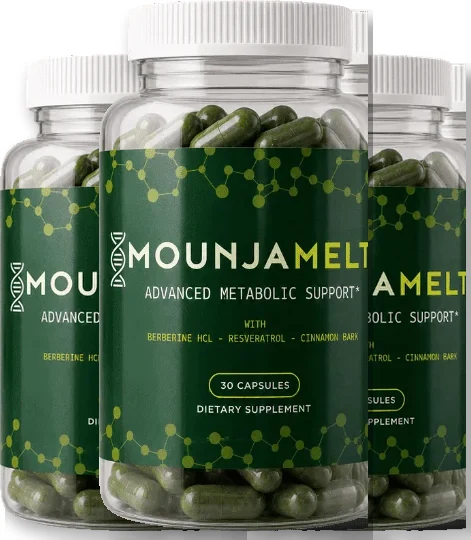
See the chromium dose inside MounjaMelt
Every named ingredient, the honest evidence behind each one, and the current pricing on the official store.
See MounjaMelt PricingTwo objections worth taking seriously
"If the weight effect is that small, why bother?" Because weight loss is a chain, and cravings are one of its weakest links. Most diets do not fail on a spreadsheet; they fail at 4pm when a blood-sugar dip meets a vending machine. An ingredient that makes that moment slightly less intense, every day, for weeks, can be the difference between a plan you keep and one you quietly abandon. The direct effect on fat is tiny; the indirect effect on adherence is where the value sits. A short controlled trial of chromium picolinate on food intake and satiety is the closest direct test of that mechanism: Anton et al. Effects of chromium picolinate on food intake and satiety. Diabetes Technology & Therapeutics, 2008.
"Isn't chromium picolinate controversial or unsafe?" Years ago there were laboratory concerns about very high doses, but at the amounts used in supplements — micrograms, not milligrams — chromium picolinate is generally well tolerated in healthy adults, and food-based chromium has no established upper limit. The real safety flag is different: because chromium can influence blood sugar, anyone taking diabetes medication should speak to a clinician first, since combining glucose-lowering agents can stack. We cover that interaction in our overview of weight-loss supplement side effects and safety.

Why chromium pairs with berberine
Chromium rarely works alone in a good formula, and its most logical partner is berberine. The reason is that the two hit blood sugar through different doors. Chromium supports the insulin-signalling side of the equation, helping the hormone move glucose into cells more efficiently. Berberine, by contrast, activates an energy-sensing pathway called AMPK, which encourages cells to take up and use glucose somewhat independently of insulin. Two different mechanisms aimed at the same goal — steadier glucose — is complementary rather than redundant.
That is the thinking behind combining them, and it is why you will often see both on the same label. If you want the deeper dive on the more hyped half of that pair, our analysis of berberine and the natural GLP-1 weight-loss evidence separates what the human trials actually show from the "nature's Ozempic" marketing. The short version: berberine is real but modest, chromium is real but modest, and together they are a sensible blood-sugar duo rather than a magic bullet.
How to give chromium a fair test
The mistake people make with a mineral like this is expecting to feel a lightning bolt. You will not. Chromium works quietly, so judge it by outcomes rather than sensations. Take it consistently for four to eight weeks, keep a two-line daily note of your afternoon cravings and snacking, and look at the trend rather than any single day. Pair it with the obvious dietary move: reducing the refined sugar and fast carbohydrate that create the spikes in the first place. The mineral smooths the curve; the diet flattens it.
It is also worth being clear about what chromium cannot do. It will not out-run a diet built on sweets, it does not target belly fat, and it is not a substitute for protein, fibre, sleep and movement, all of which influence blood-sugar stability far more than any micronutrient. Think of chromium as a helpful assistant to those fundamentals, not a replacement for them.
Who is most likely to notice a difference?
Chromium is not equally useful for everyone, and being honest about who benefits most is part of setting fair expectations. The people who tend to report the clearest craving relief describe a specific pattern: strong, recurring urges for sweets and refined carbohydrate, often in the afternoon or evening, frequently on the back of a diet already high in sugar. For that group there is an obvious problem for the mineral to work on, because smoothing the blood-sugar swings that drive the urge has something real to smooth.
By contrast, someone whose diet is already low in refined sugar, whose cravings are mild, and whose blood-sugar handling is unremarkable has far less room for a trace mineral to help. There is simply less of a gap for chromium to fill. That is not a flaw in the mineral; it is a reminder that supplements act on deficits, and if the deficit is small the effect will be small too.
Dietary intake matters here as well. Chromium is found in whole grains, broccoli, meat and some fruits, and outright deficiency is uncommon in people eating a varied diet. A supplement is most defensible when intake is genuinely low, or when the craving pattern above is prominent, and least defensible as a blanket addition for someone with no symptoms and a solid diet already.
The practical implication is to match the tool to the problem. If sugar cravings are the specific thing standing between you and a lower-calorie diet, chromium is one of the more rational mineral choices to trial. If cravings are not really your issue, your money is better spent on the levers that are — whether that is fibre for fullness, protein for satiety, or simply a plan you can follow. Chromium rewards the right candidate and does very little for the wrong one.
How MounjaMelt uses chromium
MounjaMelt includes chromium for exactly the role the evidence supports: craving control and blood-sugar handling as part of a broader once-daily formula. Rather than isolating it, the formula sits chromium alongside berberine's AMPK support, green-tea catechins for thermogenesis, and fibre for satiety — a stack designed so that several small, honest levers add up to a diet you can actually keep. The dose is kept in the sensible micrograms range that respects the safety profile.
If you want to see how chromium sits alongside the rest of the ingredients, our full MounjaMelt formula and pricing breakdown lists every named component and the current offer, and is explicit that per-capsule amounts were not published. The philosophy throughout is the same one this article takes: name the mechanism, state the honest magnitude, and let the diet do the work chromium is only there to support.
Medical note: this article is general information, not medical advice. Dietary supplements are not intended to diagnose, treat, cure or prevent any disease. Speak to a healthcare professional before starting any supplement, especially if you are pregnant, nursing, have kidney or liver problems, or take diabetes or other blood-sugar medication, since chromium can affect glucose levels.
Frequently asked questions
Does chromium picolinate reduce sugar cravings?
It may help some people, modestly. Chromium supports the action of insulin, and steadier blood-sugar handling is associated with fewer sharp carbohydrate cravings in several small trials. The effect is not dramatic or universal, and it works best alongside a diet that is not built on refined sugar in the first place.
Can chromium help you lose weight?
Only a little, if at all, from the mineral by itself. Meta-analyses of chromium picolinate show a very small average reduction in body weight that sits close to the edge of what is meaningful. It is best understood as craving and blood-sugar support that makes a calorie-aware diet easier to stick to, not as a weight-loss agent in its own right.
How much chromium is safe per day?
Chromium is dosed in micrograms, and supplemental amounts in the low hundreds of micrograms daily are widely used and generally well tolerated in healthy adults. There is no established upper limit from food, but concentrated supplements should stay within labelled amounts. If you have kidney or liver problems or take diabetes medication, check with a clinician first.
Does chromium work better with berberine?
They act on blood sugar through different routes, so pairing them is reasonable rather than redundant. Chromium supports insulin signalling while berberine activates the AMPK energy pathway, and both aim at steadier glucose handling. No supplement combination replaces a lower-refined-sugar diet, which does the heavy lifting either way.
Scientific references
- NIH Office of Dietary Supplements — Chromium fact sheet
- NIH Office of Dietary Supplements — Dietary Supplements for Weight Loss
- NIH NCCIH — Diabetes and Dietary Supplements
- Tian H et al. Chromium picolinate supplementation for overweight or obese adults. Cochrane Database Syst Rev, 2013
- Anton SD et al. Effects of chromium picolinate on food intake and satiety. Diabetes Technol Ther, 2008
- Docherty JP et al. A double-blind, placebo-controlled, exploratory trial of chromium picolinate in atypical depression: effect on carbohydrate craving. J Psychiatr Pract, 2005
- FTC — Health Products Compliance Guidance (weight-loss claims)
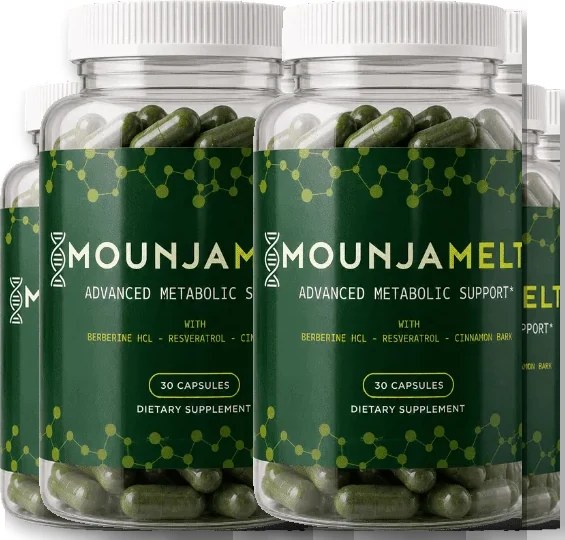
See how MounjaMelt puts this together
A sensible chromium dose, the berberine pairing, and the honest evidence — with today's pricing on the official store.
Check Availability